During the latest rounds of budget negotiations, Wegela said, neither party was advocating to retain SOAR.
“The problem with SOAR is that there were a lot of lofty promises, project selection was too political, and it never delivered,” state House Finance Committee Chair Rep. Mark Tisdell, R-Rochester Hills, told Bridge. “That’s why it wasn’t going to survive.”
Yet both Michigan Economic Development Corporation CEO Quentin Messer Jr. and Whitmer consistently supported the spending. Whitmer’s office didn’t respond to Bridge questions about the funding cut but issued a statement saying she is “proud that the Legislature came together to pass a budget that will protect and create thousands of jobs, lower costs and help more people make it in Michigan.”
The MEDC says $11 billion in private corporate investment was promised to Michigan as a result of SOAR, and $1.1 billion of that has been spent.
Business leaders also supported the program, said John Walsh, CEO of the Michigan Manufacturers Association.
RELATED:
Losing SOAR “was not unexpected,” Walsh told Bridge on Friday, based on legislator comments over the year. He said he hopes the budget vote is a first step toward evaluating all state economic development efforts for long-term state commitment.
“What’s critical (for business) is the consistency of a plan,” Walsh said, with aspects like amounts and methodology open to debate.
The MEDC was still processing the changes in the hours-old budget on Friday, including how SOAR had not been revived.
“With the shifts in the global economy, we will continue working with our partners in the Legislature on tools and resources …. to position Michiganders for long-term economic success,” Michelle Grinnel, chief communications and attraction officer at the MEDC, told Bridge.
Super-sized developments and spending
Michigan got a jolt in fall 2021 as one of its largest employers, Ford Motor Co., chose Kentucky and Tennessee for its largest manufacturing investment ever.
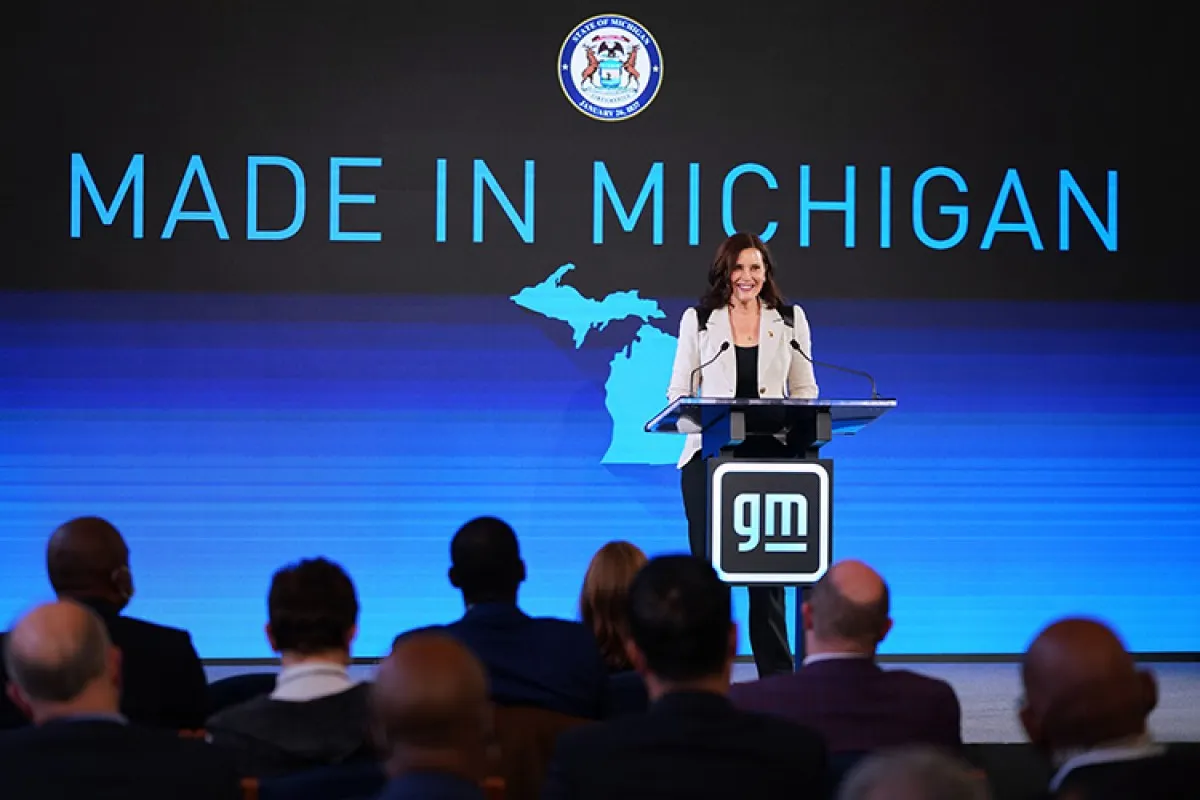
Panicked Michigan lawmakers and the MEDC pitched a bigger incentive program, landing on the $2 billion SOAR fund.
“Because both parties in the Legislature came together, our state will be able to win huge, transformational projects and compete effectively for every dollar and every job for decades to come,” Whitmer said in December 2021 as she signed the bipartisan SOAR legislation.
“The critical economic development fund we have set up will pay massive dividends.”
SOAR had two components:
- The Critical Industry Program, which awarded hundreds of millions directly to companies, often well ahead of job creation — a new twist to state subsidies.
- And the Strategic Site Readiness Program, which spent state money on speculative land development and infrastructure such as roads and electrical upgrades that normally a business would undertake.
Together, the MEDC said, the programs added dollars and cut development time in a time-critical environment.
But SOAR also raised the stakes for the size of projects, generating unprecedented resident pushback along with lawmaker scrutiny.
Over the summer, state Sen. Thomas Albert, R-Lowell, called for eliminating SOAR and said he would introduce a plan to eventually eliminate the MEDC.
“We now have years of experience to see how this program has worked, and if you look at the investments that have been made, the track record is abysmal,” Albert told Bridge in August.
Among the projects have been the Gotion Inc. EV battery component factory planned near Big Rapids that drew intense opposition and now is in litigation with Green Charter Township and Our Next Energy, an EV battery startup that received $70 million of a $210 SOAR award but now is downsizing its factory plans and shifting its business model.
The claims that bipartisan lawmakers made SOAR happen ring hollow to Marjorie Steele, who founded the Economic Development Responsibility Alliance to bring the voice of residents to the incentive debate.
“Residents had absolutely no clue what it was or that it was even being passed,” Steele said. “We are tired of Legislators going over our heads and funding projects that we have specifically said no to.”
Looking ahead
Unclear is what the end of SOAR will mean to Michigan’s economic development plan. The MEDC also faces cuts to business development and Pure Michigan marketing, as well as other programs.
“Critical funding to drive economic development and other business priorities were reduced or stripped out of the budget, which will only further hamper Michigan’s global economic competitiveness,” Sandy Baruah, CEO of the Detroit Regional Chamber, said in a statement on Friday.
Other states and nations are “making greater and greater investments, and they’re making the changes necessary in their business climate,” Walsh, of the manufacturing group, said, further pointing to the need for Michigan to consider what comes next.
Site Selection Group ranked Michigan third in the US during 2024 for business subsidies, behind Illinois and Indiana.
Michigan’s Dow Chemical retention project — awarded $120 million — was the largest mentioned by Site Selection Group. It ranked ninth. In 10th place was a $110 million award to Corning.
Yet the state’s overall business climate ranking by the organization was 14th, due in part to its tax rates.
Meanwhile, other economic development tools appear to still be in use, such as the Transformational Brownfield Program, which still has about $140 million available for awards allowing businesses to keep taxes either during construction or afterward.
The State Essential Services Assessment, used by large manufacturers instead of personal property taxes on their equipment, also can be waived by the state. That’s happened at least twice this year as part of the incentives awarded to BAMF Health and Peterson Brands.
Economic Development Leaders for Michigan, a coalition of the largest local and regional groups in the state, also is calling for doubling the research and development tax credit fund, bringing it to $200 million. And some business leaders also still urge adding a payroll tax capture option for employers who add high-paying jobs.
Business Watch
Covering the intersection of business and policy, and informing Michigan employers and workers on the long road back from coronavirus.
About Business Watch
Subscribe
Share tips and questions with Bridge Business Editor Paula Gardner
Thanks to our Business Watch sponsors.
Support Bridge’s nonprofit civic journalism. Donate today.
This must be the credit given on each article: Put at bottom of each article in small print
“This story was originally published by Bridge Michigan (bridgemi.com), a nonprofit and nonpartisan news organization. To get regular coverage from Bridge Michigan, sign up for a free Bridge Michigan newsletter here (https://bit.ly/BridgeMichiganNewsletter).”
Use photos as well and credit photos. Simply copy and paste name and put: Photo Credit: John Doe