

- The last new penny was stamped Wednesday
- Pennies cost more than their face value to produce
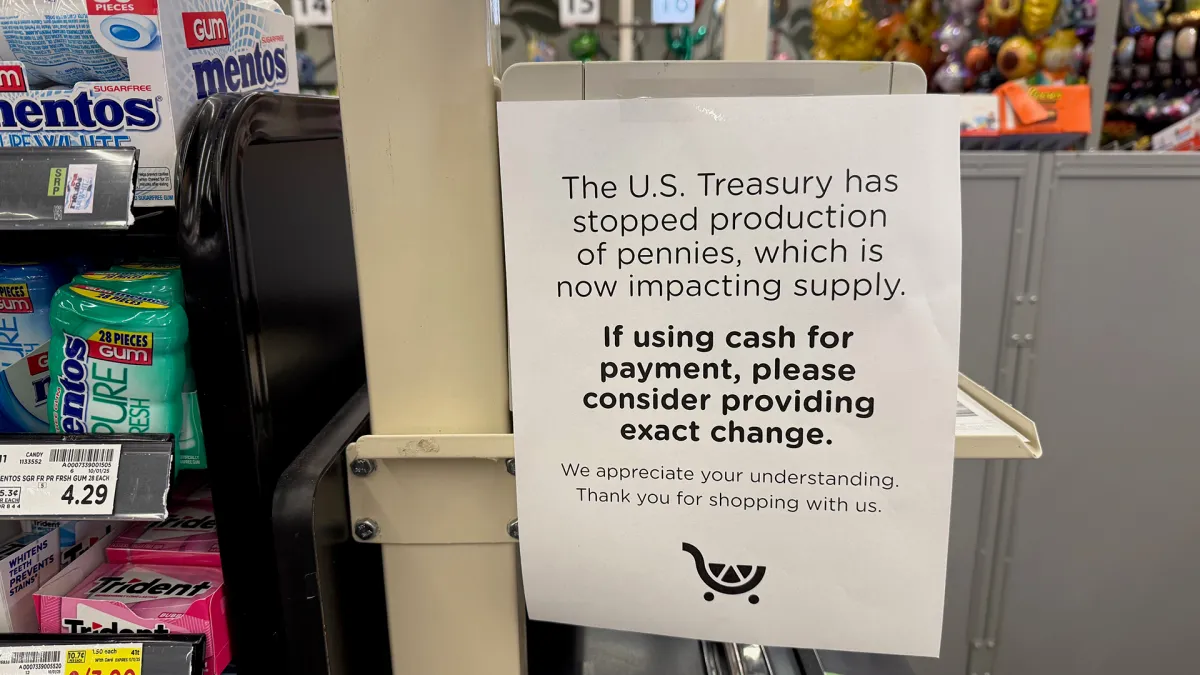
- The phase out is causing shortages at stores that have a lot of cash sales
The United States has stopped making cents.
The penny, that is.
Production of pennies has been phasing down for months. Treasury Secretary Scott Bessent appeared at the Philadelphia Mint on Wednesday to watch as the final one-cent coins were stamped.
It marked the end of a coinage first produced in the US in 1792. Before this week, the last coin to be discontinued was the half-cent in 1857.
“For far too long the United States has minted pennies which literally cost us more than 2 cents. This is so wasteful!” wrote President Donald Trump on a social media post in February.
Related:
- Migrant farm work has boomed in Michigan. The feds just cut workers’ pay
- Michigan lawmakers: Eliminate economic development agency
- Poll: Tariffs, grocery costs have Michigan residents sweating economy
Retailers and their customers are already feeling the impact of the phase out, with penny shortages and some stores forced to round up or round down to the closest nickel.
In Michigan, chains like Home Depot and Kroger have posted signs asking customers to use exact change.
Those shortages are bound to become more frequent, with trade associations urging Congress or the administration to step in and offer guidance to businesses about how to handle shortages.
Here’s what you need to know:
Will the elimination of pennies save the government money?
The move will save $56 million, Beach told reporters at the Philadelphia Mint.
That’s because every copper-plated zinc penny costs 3.69 cents to mint.
The savings from cutting pennies could be eaten up if the demand for nickels goes up — the nickel-and-copper five-cent piece costs 13.78 cents to produce.
What do stores do when they are out of pennies?
Without pennies, stories will round up or down to the nearest nickel on cash purchases. Sometimes you’ll save up to 2 cents, sometimes you’ll pay an extra cent or two.
For example, at least some Michigan Kroger stores are rounding to the nearest nickel. A call to a spokesperson for The Kroger Co. in Cincinnati was not returned to Bridge, but the company this month told the Cincinnati Enquirer it won’t refuse pennies for payment.
So far the shortages have been sporadic. Vic Veda, vice president of communications for the Michigan Retailers Association, told Bridge that the organization had yet to hear complaints of penny shortages from their members.

Will stores round up or down if I pay with a credit card?
No. You’ll continue to pay the exact amount with credit cards, personal checks and electronic payments.
Why is there a shortage?
With at least 114 billion pennies in circulation — more than 300 pennies per U.S. resident — it’s difficult to fathom why there would be a shortage. But more than half of those pennies are sitting in drawers, penny jars, or beneath couch cushions, according to the American Bankers Association. All those out-of-circulation coins is why the US Mint typically stamped an additional 3 billion pennies a year.
Now that no new pennies are being produced, banks can’t order new supplies, and banks then aren’t able to sell the rolls of shiny new pennies to businesses that conduct a lot of cash sales, like convenience stores and groceries.
What about all the pennies in my penny jar?
They’re still “real” money because pennies continue to be legal tender. Banks will still accept them — in fact, they’ll be glad to get them. Michigan-based Dart Bank, with branches in Ingham County, offered a 20% bonus on pennies turned in by anyone beginning in early November through its “Copper That Counts” promotion. For example, if you turn in $5 of pennies, you’ll get $6.
“It’s an easy and rewarding way for community members to put spare change to good use and earn a little extra in the process,” Michelle Carpenter, a Dart Bank senior vice president, said in a news release.
Be forewarned: there is a 25,000 penny limit per month.
Will pennies become more valuable?
Probably not. With so many produced, it’s unlikely that pennies will be worth more than 1 cent for decades.
Business Watch
Covering the intersection of business and policy, and informing Michigan employers and workers on the long road back from coronavirus.
About Business Watch
Subscribe
Share tips and questions with Bridge Business Editor Paula Gardner
Thanks to our Business Watch sponsors.
Support Bridge’s nonprofit civic journalism. Donate today.
This must be the credit given on each article: Put at bottom of each article in small print
“This story was originally published by Bridge Michigan (bridgemi.com), a nonprofit and nonpartisan news organization. To get regular coverage from Bridge Michigan, sign up for a free Bridge Michigan newsletter here (https://bit.ly/BridgeMichiganNewsletter).”
Use photos as well and credit photos. Simply copy and paste name and put: Photo Credit: John Doe

So long, pennies! US stops making cents. Michigan customers feel the pinch added by Tribune on
View all posts by Tribune →