

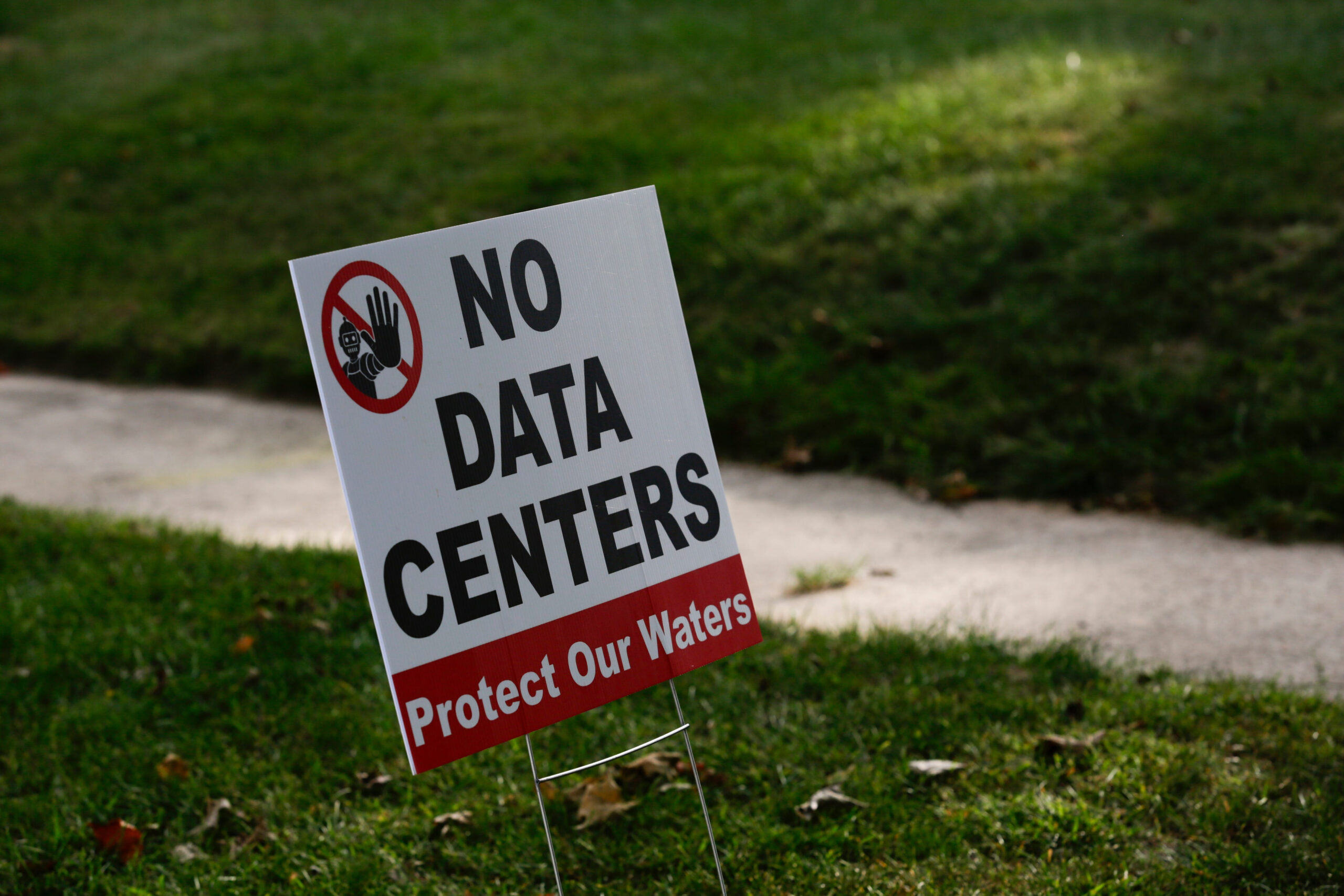
Most pollsters, pundits and journalists try ― and fail ― to understand what drives the eruption of opposition to AI data centers, because they make this simple mistake: They only ask people about data centers.
Or they don’t talk to people at all.
My firm took a different and far more useful approach through four surveys and more than 8,000 qualified respondents: We examined the public’s complex and widely misunderstood views on artificial intelligence, then applied those learnings to the data center issue.
Our findings reveal a massive gap between the AI industry’s actions and the public’s expectations, a misalignment that can’t be closed unless data center proponents start caring enough to know more about the people they presume to serve.

Data centers don’t need to be a losing political issue. The public knows enough about the benefits of AI to accept the necessity of data centers, our analysis found, but only if the industry does these four things:
Address benefits and concerns together; offer choices, not ultimatums; show proof that they’re keeping their promises and meeting their responsibilities; and demonstrate that people with the authority to act are managing data centers.
Here’s how we reached those conclusions.
First, we found that it’s a mistake to separate people into two binary groups, supporters and opponents of artificial intelligence. In fact, 62% of respondents could identify both the opportunities and risks of AI in general. We found the same dynamic when we posed specific questions about the technology such as whether AI helps or hurts the prospects of entry-level employees: More than 75% of respondents said both results are possible, depending on how employers adapt to the technology.
Reflecting the public’s ambivalence, a respondent from Redford told us: “I think (AI) will help people get basic answers to basic questions. But I think people will become way too reliant on it.”
For the data center industry, these findings underscore the importance of examining both what people might value in an industry fueled by data centers and ― in the same conversations ― the consequences of what they want changed. Most people aren’t opposed to data centers in a vacuum. They’re opposed to data centers in the environment created by the industry itself.
Second, we found that while 61% of respondents said they want AI to become more useful in their own lives, 79% insisted on “real choices” about its use. A respondent from Kalamazoo told us he wants big companies to stop using AI “for everything and pushing it so hard onto everyone.”
What this means for data centers: People want choices, not turn-key projects designed in San Francisco and thrust upon Michigan communities. The data center industry needs better research that distinguishes customers who value the service, neighbors who experience the facility and ratepayers who bear shared costs. Those audiences can overlap, but their interests should be measured directly.
Third, we found that 78% of respondents want proof that AI is improving quality, service, safety or learning before relying heavily on the new technology.
For data center growth, the industry must provide a verifiable public benefit ― a list of ways a data center will enhance the community’s quality of life and a mechanism for holding the company accountable. Most Americans no longer trust traditional institutions such as corporations, politicians and the media; they certainly aren’t going to put blind faith in a new and mysterious industry.
Finally, nearly nine of every 10 people agreed with this statement: “It should be easy to ask for a human review of important AI decisions.” For a prospective data center operator, this means identifying, for residents, who will make key decisions at the site and who will be empowered to investigate complaints and correct operating issues.
Before buying up land in secret and putting local operatives on their payrolls, data center operators should talk to residents about what they expect from an AI project. Through those open-ended conversations, operators should identify what changes to make to their plans and make a single, highly visible person accountable for implementing them.
Rather than divide the community between opponents and supporters, the data center industry needs to understand that Michiganians can be both for and against the AI incursion. That fact holds an opportunity for an industry now under assault.
Carl McQueen is the founder of McQueen Analytics in Grand Rapids.
This article originally appeared on The Detroit News: Data centers can win public support. Here’s how. | Opinion
Reporting by Carl McQueen / The Detroit News
USA TODAY Network via Reuters Connect

Data centers can win public support. Here’s how. | Opinion added by admin on
View all posts by admin →