

EAST LANSING — A number of college coaches and administrators hope the Protect College Sports Act can pass the Republican-controlled U.S. House of Representatives during the year-end lame-duck session before Democrats take control of Congress in January.
Others, like Michigan State coach Pat Fitzgerald, aren’t holding out hope.
“The last I saw, people in Washington, D.C., can’t agree on peanut butter and jelly,” Fitzgerald said Nov. 9. “So I haven’t put a lot of stock in that, to be quite honest with you.”
The Protect College Sports Act looked like a rare agreement when it garnered bipartisan support in a 77-22 Senate vote on Sept. 28. But after being shelved for the midterm elections that saw the Democrats win the majority of seats in both chambers of Congress this coming session, it is likely that the bill’s current iteration won’t pass the House in its lame duck session. In the eyes of some of Michigan’s new members of Congress, the bill needs significant revision.
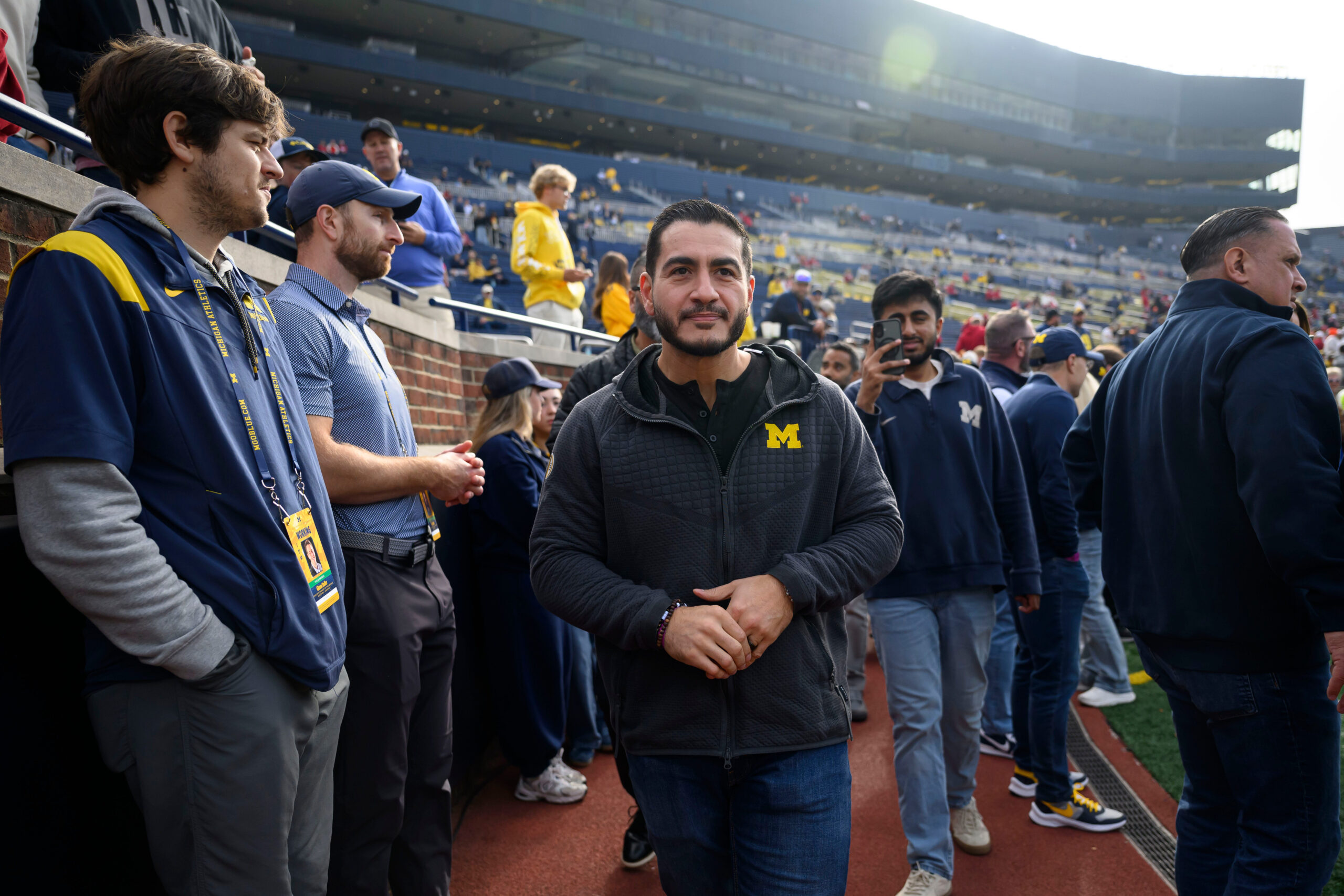
In an interview with The Detroit News before his midterm election win over Republican Mike Rogers, Sen.-elect Abdul El-Sayed, D-Ann Arbor, said that he supports significant revisions to the Protect College Sports Act. His critiques center on its focus on regulating athletes, but not coaches and institutions that make millions themselves.
“I think there’s an iteration I could get behind,” El-Sayed told The Detroit News, “but any iteration that doesn’t put the bargaining in the hands of the people who do the work, who are the athletes, I think misses the broader point.”
El-Sayed won the seat left vacant by retiring Sen. Gary Peters, D-Bloomfield Township, who was one of those 77 votes supporting the Protect College Sports Act. Other votes may also flip, now that the Democrats have at least 54 Senate seats, with slim leads in races in Mississippi and Alaska, where a winner has not yet been declared.
For the majority of its history, the NCAA did not allow student-athletes to profit off of their athletic endeavors. Then, that regulation crumbled in 2021 with the Supreme Court’s decision in NCAA v. Alston, which ruled that restricting education-related benefits for athletes violated antitrust law. That snowballed over the past five years with revisions to transfer rules and direct revenue sharing that created an athletics landscape where athletes can collect millions of dollars for their services. Much of this is unregulated, or loosely regulated with a blind eye. And an NCAA hampered by court injunctions and lawsuit threats turned to Congress to fix its issues.
The Protect College Sports Act was co-sponsored by Sen. Ted Cruz, R-Texas, and Sen. Maria Cantwell, D-Washington, with significant changes to the current system. For instance, it caps revenue sharing at around $49 million and institutes a one-time transfer rule. It also preempts state laws regarding NIL rights that vary across the country. The big feat, though, is its antitrust exemption for the NCAA.
El-Sayed, a former three-sport athlete who played club lacrosse at the University of Michigan, said the problems with college sports are apparent.
“As a college football fan, I think NIL has been good because it’s been able to enable players to be fairly compensated for their labor,” El-Sayed said. “And at the same time, it’s made college football so much more chaotic and taken some of the soul out of what I think all of us who are fans love about it — a commitment to your school and to the colors and the fan base. And I think there needs to be reform.”
However, the senator-elect whose campaign centered on messages of affordability and healthcare thinks that focusing regulations on athletes’ earning power rings hollow when so many coaches and administrators are collecting multi-million-dollar payouts when they’re canned and broadcasters are reportedly reaping television contracts worth hundreds of millions of dollars.
Michigan offensive coordinator Jason Beck, fired after nine games this season, will make nearly $10 million in his exit package. Fitzgerald’s predecessor at Michigan State, Jonathan Smith, had a buyout clause guaranteeing at least $33 million, paid in monthly installments through January 2031.
El-Sayed wants college athletes to have the ability to unionize.
“The worry that I have with that particular piece of legislation is that it empowers the corporations who benefited for a very long time,” El-Sayed said. “Whether it’s the NCAA itself or the television stations that are making money hand over fist. Rather, I think using the tools that we have to hold corporations accountable, like unions, that seems to me a better approach. I think once you empower the college athletes to unionize, I think you end up having to bargain between the unions that represent the athletes and these corporations in a way that will both serve the needs of the athletes and also serve the fans who love the sport, rather than just empowering the corporations who benefit tremendously on all of this.”
El-Sayed isn’t the only Michigan member of Congress who opposes the current Protect College Sports Act. Rep. Debbie Dingell, D-Ann Arbor, issued a statement Aug. 6 with fellow chairs of the Congressional Labor Caucus challenging the bill’s antitrust components and lack of collective bargaining.
“The bill as it stands, does not adequately resolve the core issues of defining and improving players’ control, involvement, and input on the conditions of participating in collegiate athletics,” the Caucus wrote.
In the next session of Congress, Democrats will represent the congressional districts for the University of Michigan (Dingell), Michigan State University (Will Lawrence, D-Lansing) and Western Michigan University (Sean McCann, D-Kalamazoo).
Over the summer, the NCAA changed its March Madness field from 68 teams to 76. On Monday, Nov. 9, the College Football Playoff announced its expansion to 24 teams. Both changes came with a significant stream of revenue for broadcasting rights, even with college football viewership down 11 percent through October compared to the previous season, according to Front Office Sports.
MSU’s Pat Fitzgerald, who, alongside Illinois coach Bret Bielema, is a Big Ten representative in the American Football Coaches Association, believes that while imperfect, the Protect College Sports Act at least moves forward at a time when college sports need solutions.
“I’d love for it to pass, just I’m not gonna hold my breath,” Fitzgerald said. “Is it that perfect? No. Is it a first step potentially? Yes. At least a framework for common sense.”
If the Protect College Sports Act doesn’t pass the House by year’s end, a new crop of representatives and senators, including El-Sayed, will pick up the baton. Fitzgerald said he puts his trust in athletic directors and Big Ten commissioner Tony Pettiti to broker the right deal with Congress.
Michigan’s outgoing athletic director, Warde Manuel, wrote in a September address asking fans to write to their senators and urge them to vote yes on the bill. New MSU athletic director Dan Bartholomae, previously of Western Michigan, also supports it.
“I think the players should be involved in those discussions. That’s why we have student-athlete advisory councils,” Fitzgerald said. “… There’s a way that we should empower our players to be a part of those conversations, and if they’re not, it goes back to what I answered earlier:
“We don’t have a player or coach problem or football problem. We have an administrative problem, and those things need to be fixed.”
cearegood@detroitnews.com
@ConnorEaregood
This article originally appeared on The Detroit News: Why Abdul El-Sayed wants major revisions to Protect College Sports Act
Reporting by Connor Earegood, The Detroit News / The Detroit News
USA TODAY Network via Reuters Connect

Why Abdul El-Sayed wants major revisions to Protect College Sports Act added by admin on
View all posts by admin →