

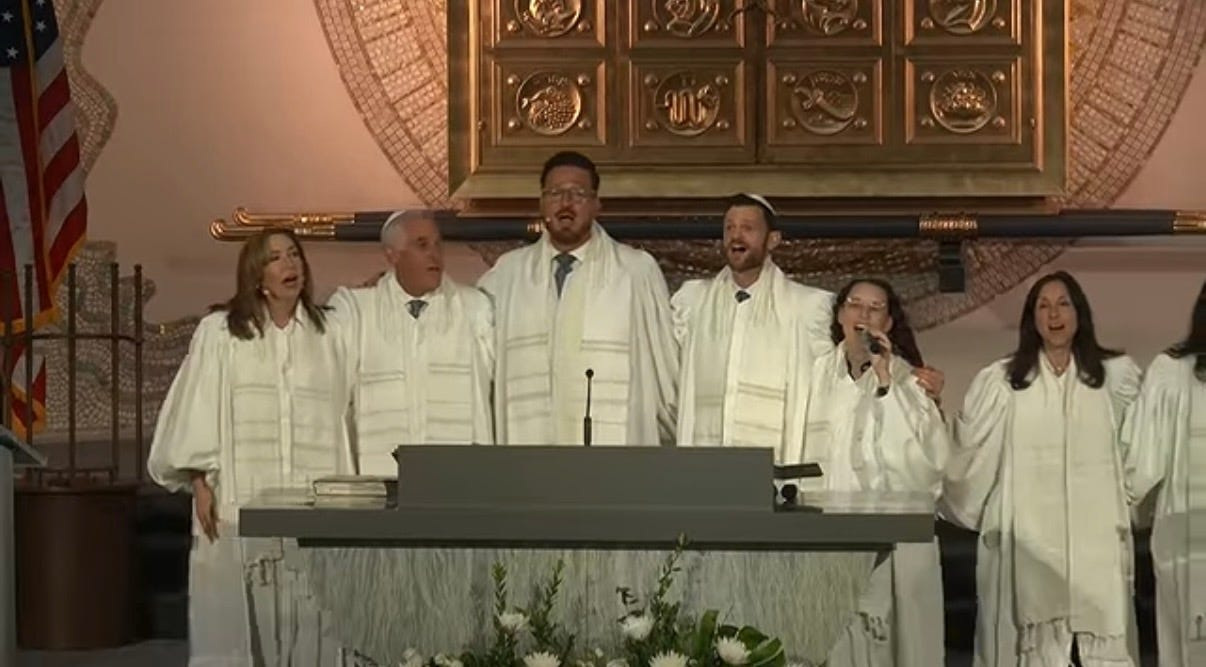
At a small Orthodox synagogue in Oak Park, Kehillat Etz Chayim, it was a packed crowd on Sept. 11 for Jewish New Year services marking the start of Rosh Hashanah. On the same evening, a few miles away at the largest synagogue in Michigan, Temple Israel in West Bloomfield, about 1,000 people packed the sanctuary for their first services since a terrorist struck the house of worship six months ago, in March.
And on Sunday and Monday, Sept. 20-21, thousands more are expected to pack synagogues in Michigan for Yom Kippur, the most solemn day of the year for Jews, known as the Day of Atonement.
Despite increased security and fears about antisemitism, worshippers are showing up and making connections during the 10 days known as the high holidays that are observed from Sept. 11-21 this year, said leaders with Jewish centers in metro Detroit. It’s the time of the year when synagogues and temples see their biggest crowds, as they gather to hear sermons from rabbis and join in prayer. One theme this year during services is resilience, local rabbis said.
“We know that antisemitism has increased … but we can’t live in fear, nor be scared or reluctant to be Jewish and to celebrate our sense of peoplehood and our identity,” Rabbi Michael Moskowitz of Shir Shalom, a synagogue in West Bloomfield with thousands of congregants, told the Detroit Free Press.
Gathering during the high holidays in large numbers reminds them that “we’re not alone,” Moskowitz said. “When you’re 0.2% of the population of the world, you can feel that at times, but knowing that we really have a community that supports us, and we’re able to engage and make ourselves better, it’s a beautiful thing.”
Given the attack at Temple Israel and other antisemitic incidents in recent years, synagogues are toughening security with increased patrols and physical barriers. In the March 12 attack against Temple Israel, Ayman Ghazali of Dearborn Heights drove his vehicle packed with explosives into the parking lot, sat there for hours, and then rammed it into an entrance, the FBI said.
“We always have security, and we’ve always increased security through the high holidays because we have our largest amount of people … but in light of this past year, all that’s been increased,” Moskowitz said. “Our property has been changed with additional bollards and obstructions that … when a car drives right into a synagogue and is able to maneuver around those things, that makes everyone aware … to make sure there’s no way that a car can get near our temple.”
The power of community was seen on Friday evening on Sept. 11 at Temple Israel during an emotional 90-minute service, its first since a Hezbollah-influenced terrorist struck their center in March. The synagogue’s sacred Torahs were brought back into the sanctuary, one of them held by Danny Phillips, the security guard injured in the attack when he was hit by Ghazali’s vehicle. The Free Press did not attend the services, but confirmed the details with the synagogue’s executive director, Jason Plotkin, and reviewed a livestream of the event.
“On a terrible day last March, this sacred place became something we never imagined it could become,” Cantor Neil Michaels said at the opening of the service. “But that day does not get the last word. We do. And that is why Rosh Hashanah is exactly the right moment to come home, because these holy days are themselves an invitation to return. This is the meaning of Tshuva, to return.”
Rabbi Harold Loss, the senior leader of Temple Israel, praised Phillip’s heroism and linked Jewish history and traditions to the community’s responses after the attack. The co-presidents of Temple Israel, Debra Gordon and Jodi Neff, spoke about how the Torahs were stored at other synagogues and The Zekelman Holocaust Center before returning Friday evening.
“We have been through what we hoped would never happen, an act of terrorism against the Jewish people,” Loss told the congregation. “We cannot undo what has happened, but we can help one another heal from it. This Rosh Hashanah is a meaningful step on the road to healing, a body of spirit, and I might add, our building. This evening, a community that refused to allow an act of terror to define us continues to heal.”
Citing a Hebrew prayer for the ill, Loss said: “The words ‘MiSheberach Avoteinu V’Imoteinu, God who blessed our mothers and our fathers,’ remind us that we are not the first generation to know fear. Tonight, at the beginning of a new year, we pray for … a complete healing, for strength, for courage, and for peace.”
A similar message is being heard at Congregation Shaarey Zedek, the largest and oldest Conservative synagogue in Michigan.
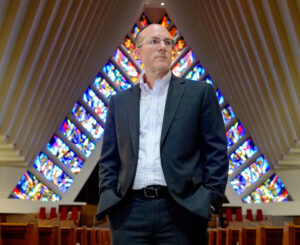
“This year in particular is marked by a drastic increase in security measures following the terrorist attack on Temple Israel six months ago,” said the synagogue’s religious leader, Rabbi Aaron Starr, who is also the president of the Michigan Board of Rabbis. “Nevertheless, the Jewish community remains proud and resilient.”
Starr explained some of the spiritual practices during the holiday: “Yom Kippur is a day of fasting and repentance with biblical origins. In advance of the holiday, we are told to engage in a process of self-reflection, evaluating our deeds over the previous year. We are to seek forgiveness from those whom we’ve wronged and practice charity. On Yom Kippur itself, we spend the day at prayer and study, asking God for forgiveness for our misdeeds.”
The holiday comes at a time of concern in Jewish communities about prejudice against their community amid a contentious political season, with some anxious about U.S. Senate Democratic nominee Abdul El-Sayed and others. This month, Starr helped lead a petition signed by several rabbis in Michigan called Nonnegotiable that asked politicians to agree to five requests for the Jewish community: Jewish safety; the right of Jewish people to define their identity; Jewish sovereignty in Israel; being welcomed in American political life; and an affirmative vision for a better Middle East. In addition to Starr, the petition has been signed by Moskowitz and a number of other prominent Jewish leaders.
The petition overlaps with the ideas around Yom Kippur.
“As Jews, the window is closing on our opportunity to make amends with the people whom we have wronged, to repent for the language we used and the actions we committed that hurt feelings or that caused harm,” Starr said. “As voters, too, we know that the window is closing for our political candidates to repent for the hurt they have caused and to take accountability for their words and their actions. For us as individuals and for our political candidates, successful repentance is marked not only by asking forgiveness, but by an honest and determined change in words, in action, and in perspectives.”
Rabbi Asher Lopatin, who leads Kehillat Etz Chayim in Oak Park, has also been outspoken in recent weeks on the challenges facing Jews in the political world, criticizing El-Sayed for his remarks after the March 12 attacks at Temple Israel when he said “hurt people hurt people,” referring to Ghazali losing family members in Lebanon in Israeli attacks. El-Sayed later apologized for those remarks to the Michigan Democratic Jewish Caucus and reportedly met with some rabbis at Temple Israel recently, according to the Jewish Insider.
“We had a wonderful packed house at our synagogue” for Rosh Hashanah services, Lopatin said. “Rabbis are trying to emphasize resilience, that the Jewish community is resilient. … We will overcome. … The hatred will not slow us down.”
Contact Niraj Warikoo: nwarikoo@freepress.com, X @nwarikoo or Facebook @nwarikoo
This article originally appeared on Detroit Free Press: After tense year, Michigan Jews mark holidays with resilience and faith
Reporting by Niraj Warikoo, Detroit Free Press / Detroit Free Press
USA TODAY Network via Reuters Connect

After tense year, Michigan Jews mark holidays with resilience and faith added by admin on
View all posts by admin →