

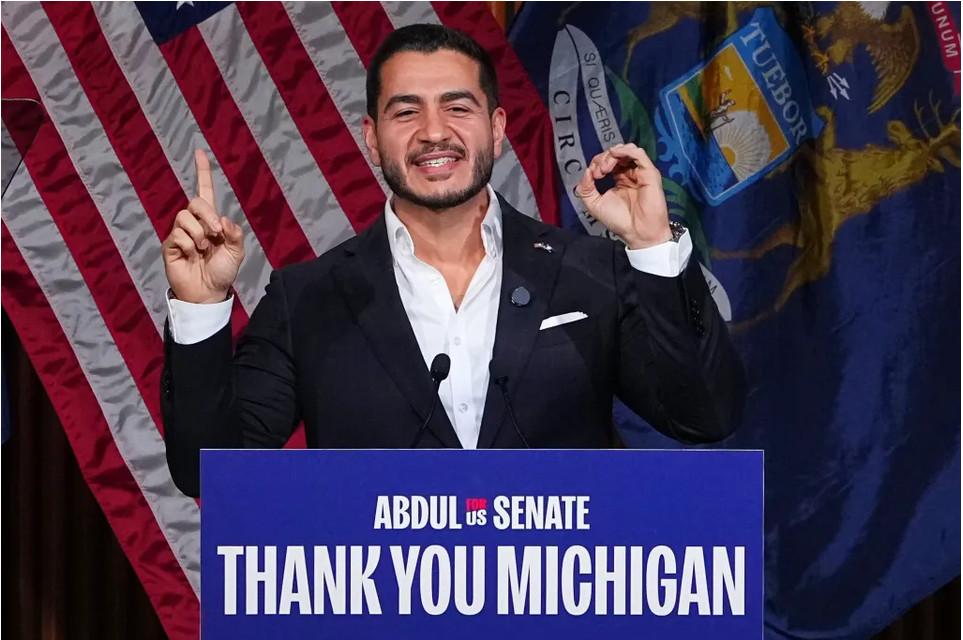
Abdul El-Sayed beats Mike Rogers in US Senate race: ‘Michigan, we did it’
- Michigan voters have cast their ballots in the US Senate race between Abdul El-Sayed and Mike Rogers
- Contentious from the start, the race has attracted record outside spending and could decide which party controls Congress
- This story will be updated with the latest results as election officials across the state tally votes
DETROIT — Buoyed by favorable national tailwinds, Democrat Abdul El-Sayed overcame party infighting to defeat Republican Mike Rogers in Michigan’s fiercely competitive US Senate race.
El-Sayed, a progressive who campaigned on universal healthcare and taxing the rich, is the first Muslim ever elected to the US Senate. He’ll be part of a new majority for Democrats, who flipped several seats in other states in a national rebuke of Republican President Donald Trump.
The Associated Press called the race for El-Sayed at 2:27 a.m, declaring him the winner over his Republican rival. He led Rogers by nearly 6 percentage points with 85% of all ballots counted.
See the latest vote tally here:
El-Sayed had already declared victory an hour earlier, thanking supporters for taking a chance on the “unlikeliest of candidates.”
“Michigan, we did it,” he told supporters at a Michigan Democratic Party watch party in Detroit. “I cannot wait to serve you with the same big-heartedness, open-mindedness, grit and earnestness that you’ve shown me.”
He also had harsh words for President Donald Trump, Vice President JD Vance and Rogers, who had each claimed he or his family were associated with the Muslim Brotherhood.
“You chose hate, and Michigan chose hope,” he said. “May we never have to see the likes of you in the state again.”
Related:
- Jocelyn Benson beats John James in governor’s race
- Voters OK Proposal 2 to get ‘money out of politics’
- More Michigan election results
El-Sayed’s victory is a watershed moment for the left wing of the Democratic Party, which viewed the Michigan race as a proving ground for progressives’ viability in competitive swing states.
Addressing the outside spending that poured in during the primary and election cycle to defeat him, El-Sayed said voters “built something bigger than a bank account.”
“We built a movement, government of the people, by the people, and for the people,” he said. “We showed that in a battle between the money and the many, that the many really can win.”
Despite a highly public feud with former Democratic primary rival Haley Stevens, who endorsed Rogers two days before the election, a majority of
voters chose El-Sayed to try to address high costs of living and put a check on the Trump administration.
“I am definitely voting Democrat just because the Republicans did nothing to stop” Trump, said Jerrilyn Mathews, a Manton retiree and former GOP voter who left the party when the president took it over.
Mathews had “doubts” about El-Sayed but ultimately voted for him and other Democrats up and down the ticket. “Considering who the opposition was, I think I’d have voted for a tin can,” she said of Rogers after casting her ballot Tuesday.
Rogers, a former member of Congress, also ran for the Senate in 2024 and narrowly lost to Democrat Elissa Slotkin.
Who is Abdul El-Sayed?
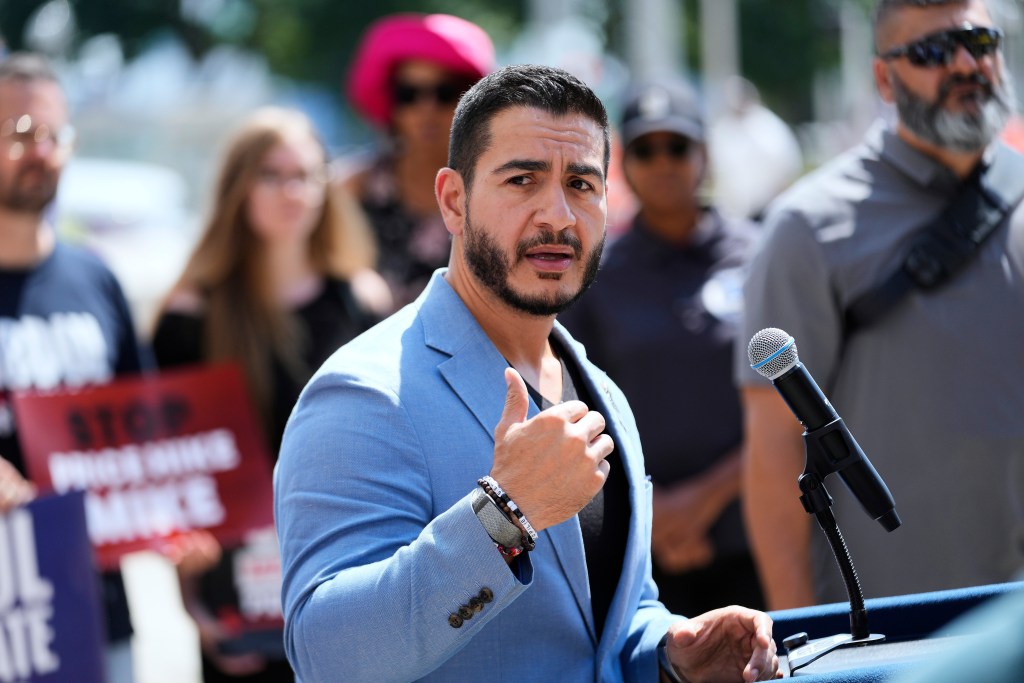
A former public health official and doctor by training, El-Sayed’s core message became a campaign slogan and rallying cry for supporters: “Money out of politics, money in your pocket, Medicare for All.”
Drawing from his experiences in public health, El-Sayed distinguished himself from other Democratic hopefuls early on by advocating for a government-backed, single-payer healthcare system he argues would help bring down costs.
He’s also taken a hardline stance on artificial intelligence, calling for public ownership and strict regulation of AI companies as well as “terms of engagement” to hold data center projects accountable if they don’t meet utility usage and environmental requirements.
As a local government appointee, El-Sayed worked with a nonprofit to provide free glasses for thousands of local kids and started a free Narcan distribution system to prevent overdose deaths, programs that continue today.
One of El-Sayed’s signature initiatives, a medical debt payoff program for Wayne County residents, has cleared more than $95 million in bills for more than 100,000 county residents since 2024. The totals fell well short of his $700 million goal, causing him to alter early campaign messaging that claimed he had met the target.
Outside his public health roles, El-Sayed has also coauthored a book on Medicare for All, hosted a podcast and offered political commentary via columns, speaking engagements and in advisory roles.
El-Sayed has never held elected office, but the 41-year-old has been on the statewide ballot before: In 2017, he resigned as Detroit’s health director to join the 2018 gubernatorial race, losing in the primary to current Gov. Gretchen Whitmer by more than 20 points.
Progressive favorite with populist pitch
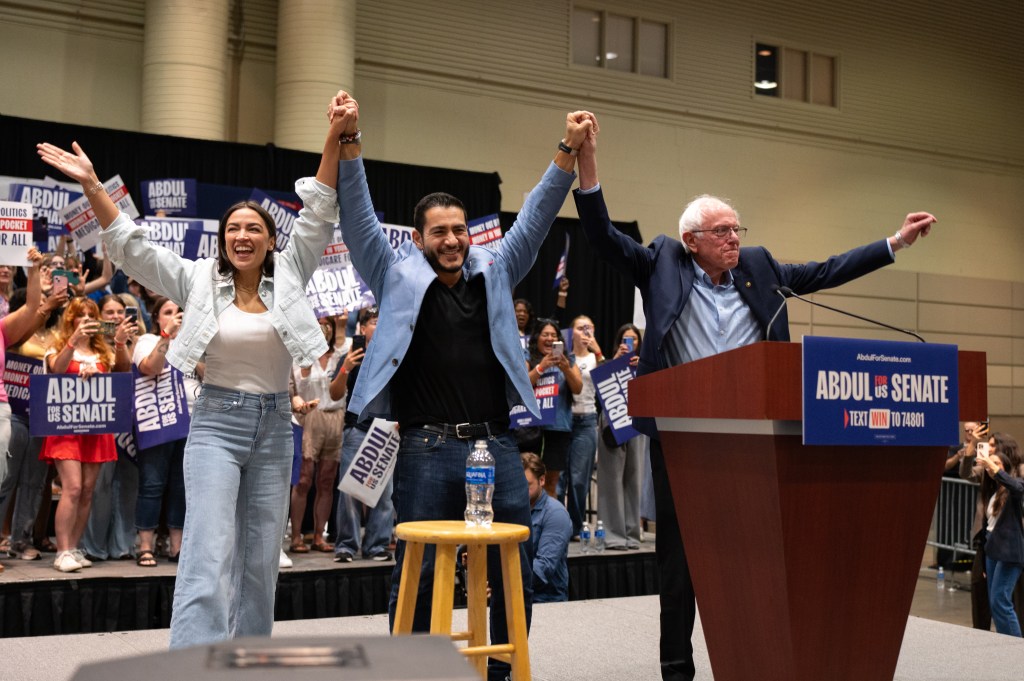
El-Sayed wasn’t shy about touting his progressive credentials, campaigning with movement favorites US Sen. Bernie Sanders and US Rep. Alexandria Ocasio-Cortez.
But in the general election cycle, he worked to unite the Democratic base while making overtures to voters not historically inclined toward his party: people who supported President Donald Trump in past elections but still feel left behind by the government he had promised to change.
“Our coalition is going to be anybody who has felt locked out by their politics and wants those politics to be unlocked for them,” El-Sayed said in October.
El-Sayed’s strategy involved spending considerable time in rural and northern Michigan, not typically considered Democratic strongholds.
Ethan Harbin, a 21-year-old Eaton County voter, voted for Trump in his first election two years ago. This time around, he chose El-Sayed and other Democrats in top offices, but selected Republicans in some local offices, such as the school board.
“We were supposed to be out of forever wars and up in the economy,” he said, noting Trump made “a lot of promises.”
“I’m a fool-me-once kind of guy,” Harbin said. “You had your shot. You know, I give you the benefit of the doubt, but yeah, I feel burned.”
El-Sayed also rallied frequently in Detroit, at various points enjoying support from key officials like former President Barack Obama and former Vice President Kamala Harris.
During a Detroit rally last month, Obama compared El-Sayed’s trajectory to his own and said El-Sayed would “finish the job we started” with the Affordable Care Act and “guarantee quality, affordable healthcare to every American.”
El-Sayed, a former public health official and longtime proponent of a “Medicare for All” single-payer healthcare system, called that stamp of approval an honor.
Blake Dembski, a 19-year-old restaurant worker in Lansing, said he supported El-Sayed and other Democrats because he aligned closely with their policies: money out of politics, healthcare for all, reining in artificial intelligence and “making things more accessible to people who are underrepresented.”
“I think that El-Sayed is somebody who’s very qualified to talk about that given that he has a medical degree,” he said. “I think that that’s what we should see more in politics, is more people with real world qualifications to talk about certain issues.”
Overcoming challenges
El-Sayed’s biggest challenge on the campaign trail was convincing independents and other persuadable voters, including those who supported Stevens, to back him in the general election.
Rogers’ campaign and other conservative groups relentlessly attacked El-Sayed, arguing his progressive views on law enforcement, healthcare and other issues were too extreme for Michigan while exploiting divisions within the Democratic Party.
Even before Stevens defected to endorse Rogers, the Republican candidate had set up a “Democrats for Rogers” coalition and worked to appeal to Black and Jewish Democrats in metro Detroit.
During the primary cycle, the common refrain by Stevens and high-profile supporters came down to general election electability, arguing that nominating El-Sayed could cost Democrats the Senate seat and a chance at flipping the chamber’s majority.
El-Sayed has also faced unrelenting attacks from Trump, Rogers and other conservatives over what they claim are connections to the Muslim Brotherhood, a transnational Islamic organization that advocates for political systems entwined with Islamic law.
Austin Haynes of Mason said he voted straight-ticket Republican, motivated by his Christian religious views, opposition to policies supporting transgender youth in schools, skepticism about Muslim people in elected office and support for Republican immigration policies.
“We believe in a small government, limited. They work for us. They serve us, and then they get the hell out of our way,” Haynes said.
But the rhetoric made many prominent Arab American leaders uncomfortable, even some who supported Trump in his winning 2024 campaign, and ate into Republican support among a group that took out their frustrations with the Biden administration’s handling of the war in Gaza at the ballot box in 2024.
A national focus
El-Sayed’s win was welcome news for Democrats, though the party ultimately didn’t need full results from Michigan’s most competitive races to win outright control of Congress.
National Democrats were hoping to take advantage of favorable headwinds and flip enough Republican seats for a majority. Associated Press projections show that Democratic candidates around the country did so, flipping at least seven seats.
Peters’ decision not to seek re-election opened a competitive Democratic primary for his replacement, and Republicans saw a rare opportunity for a flip this cycle in Rogers, who ran and only narrowly lost to now-US Sen. Elissa Slotkin in 2024.
Voters’ TV screens, phones and mailboxes have been flooded with campaign ads on the race, funded by record spending from candidates and outside groups alike.
The race is far-and-away the most expensive election in Michigan’s history, with more than $270 million in disclosed spending as of last month, not counting additional undisclosed “dark money” spending. That’s up from $217 million in disclosed spending in Rogers’ 2024 race against Slotkin.
This story was originally published by Bridge Michigan (bridgemi.com), a nonprofit and nonpartisan news organization. To get regular coverage from Bridge Michigan, sign up for a free Bridge Michigan newsletter here
This article first appeared on Bridge Michigan and is republished here under a Creative Commons Attribution-NoDerivatives 4.0 International License. 

Abdul El-Sayed beats Mike Rogers in US Senate race: ‘Michigan, we did it’ added by admin on
View all posts by admin →