

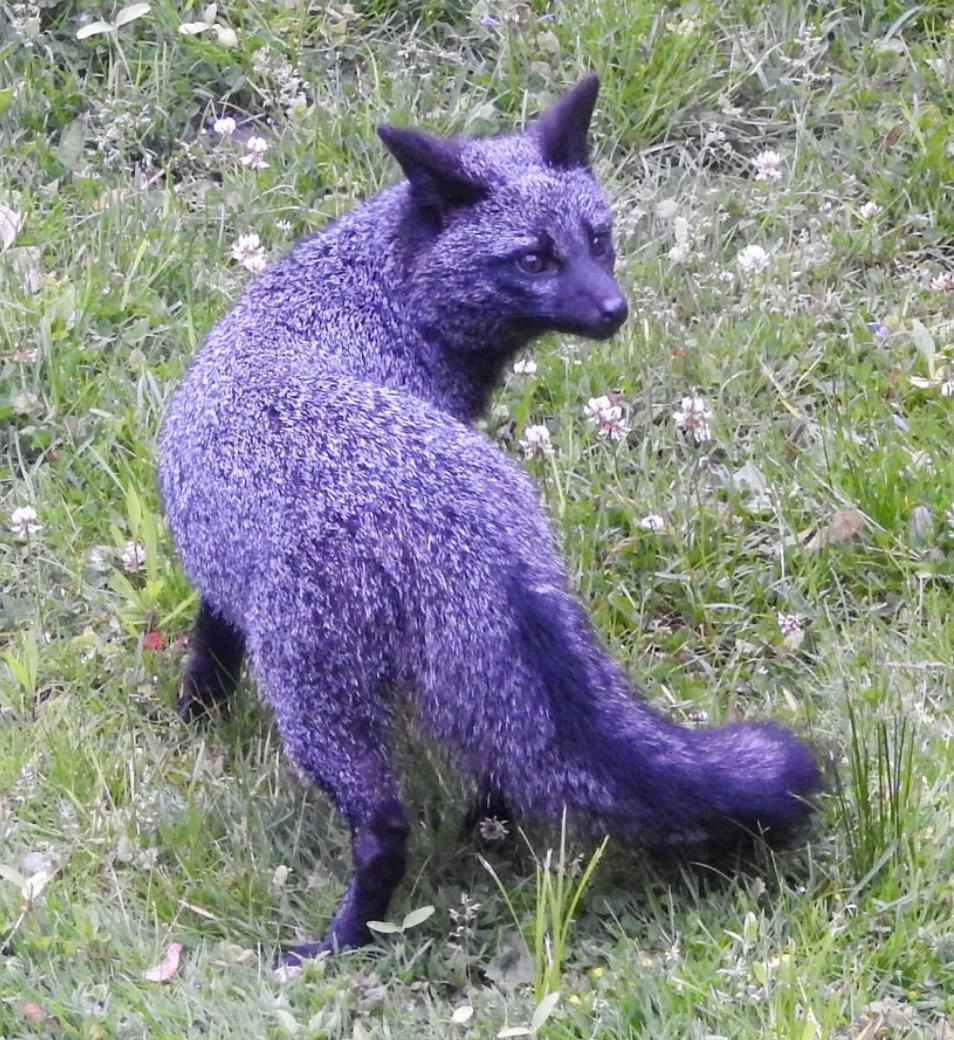
The Michigan DNR this week shared two photos of an unusual gray fox that appears purplish in photos, and said it may be the only one of its kind in the entire Midwest.
In a post on Instagram, the DNR shared photos of a melanistic gray fox looking over its right shoulder and standing and looking to its left.
The DNR also noted in a comment that although the fox looks purplish in the photos, it’s actually black.
“Depending on what screen you’re viewing the photo on, the fox can look more or less purple. The photographer mentioned that these photos were taken at dusk in poor lighting. The odd coloring could have something to do with the camera itself, or from an attempt to correct the lighting in post-production,” the post said.
The DNR compared the fox’s unusual coloration to that of black squirrels found across Michigan.
“This is an incredibly rare sight, and it’s the only example we’re currently aware of in the Midwest,” the DNR said. “Melanism is a genetic condition that results in increased dark pigmentation, giving animals a much darker coloration than is typical for their species.”Black squirrels are probably one of the most common example of melanism you’ll encounter here in Michigan. In fact, those black squirrels are actually melanistic eastern gray squirrels!” the DNR added.
In response to comments by the public, the DNR said the images “are not AI-generated, and we did not add a filter to them. We’d like to thank everyone who looked at these photos critically. With how common AI is, it’s important to view things skeptically online, and we appreciate everyone who does.”
The DNR also said the original observation of the fox was posted on iNaturalist in 2019 and the photos shared by the DNR were submitted more recently to help with gray fox research.
Michigan is home to two fox species.
“While the red fox is familiar to many Michiganders, a smaller, more elusive relative — the gray fox — also calls our state home, and the Michigan Department of Natural Resources is hoping you can help pinpoint where this secretive species resides,” the DNR said.
The DNR is partnering with Northern Michigan University, Keweenaw Bay Indian Community, Sault Tribe of Chippewa Indians and The Little River Band of Ottawa Indians to study both species.
Gray foxes are found throughout much of northern South America as well as North and Central America, including across Michigan, which is at the northernmost point of the species’ range.
Gray foxes can be distinguished from red foxes by their grizzled gray coat, black-tipped tail and reddish coloration on the neck, chest and legs. They are also one of the few members of the dog family capable of climbing trees like a cat, due to their semiretractable claws, the DNR said.
Seen a gray fox? Report it to DNR
You can submit observations through the DNR Reporting system, Eyes in the Field. (The gray fox observation report is available for selection in the mammals category.) When submitting a report, please include photographs, observation details and contact information, for follow-up questions. Report gray fox sightings.
This article originally appeared on Lansing State Journal: DNR shares photos of unique gray fox. Why it looks purple
Reporting by Dan Basso, USA TODAY NETWORK / Lansing State Journal
USA TODAY Network via Reuters Connect

DNR shares photos of unique gray fox. Why it looks purple added by admin on
View all posts by admin →