

Albion, Cooley, Madonna, 6 others on watch lists as financial woes mount
This story was originally published by Bridge Michigan (bridgemi.com), a nonprofit and nonpartisan news organization. To get regular coverage from Bridge Michigan, sign up for a free Bridge Michigan newsletter here
- Several Michigan postsecondary institutions have been on national monitoring lists for years, but the current landscape around higher education has put more financial pressure on colleges
- Most of the postsecondary schools that are currently being monitored are private colleges
- One expert said that many private colleges’ financial situations should have led to them being shut down years ago
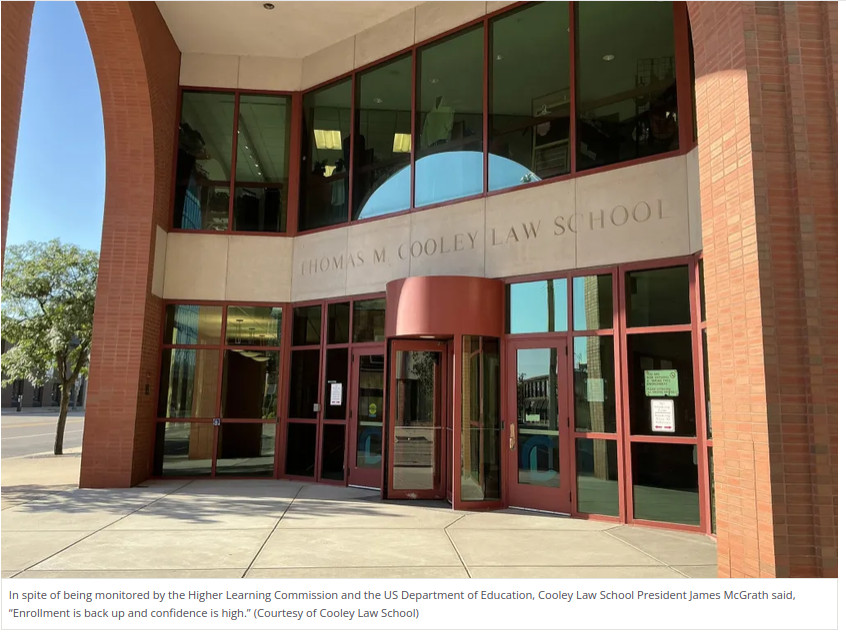
More than a decade after the Thomas M. Cooley Law School in Lansing was among the largest in the nation, its president wasn’t sure the school would be able to stay open.
Cooley went from five campuses to two, graduation plunged to a low of 60 students and the president, James McGrath, wasn’t sure the school would meet the deadline to keep its accreditation.
It made it, McGrath said, but “it came down to the wire.”
A year later, McGrath said: “Enrollment is back up and confidence is high. The campuses are active and vibrant again” in Lansing and in Tampa Bay, Florida.
Even so, Cooley is among nine colleges in Michigan being monitored by accrediting agency the Higher Learning Commission or by the US Department of Education for financial woes or other issues. Appearing on the agencies’ watch lists is “a warning sign” that an institution is struggling, though it doesn’t necessarily mean they could close, experts say.
RELATED:
Most of the monitored schools are private colleges and are being tracked for their finances, though specific reasons for the extra scrutiny weren’t clear.
Eight colleges have been on the US Department of Education’s Heightened Cash Monitoring list for at least two years, including Albion College and Cooley Law School. Others on the list, which is updated every three months, include Cleary University in Howell; Saginaw Chippewa Tribal College and MJ Murphy Beauty College, both in Mount Pleasant; Ecumenical Theological Seminary in Detroit, Salon Professional Academy in Battle Creek and Universal Technical Institute in Canton.
Meanwhile, the Higher Learning Commission said it is monitoring Cooley for “compliance issues and student outcomes” and Madonna University for its “finances,” but would not provide specifics because it does “not comment on ongoing reviews.”
Schools on the lists could be subjected to strict oversight of cash flow, site visits, extra reporting requirements and more.
The commission and federal government track higher learning institutions’ finances by creating a composite financial index score based on their operating margin, cash on hand and debt, said professorRobert Kelchen, head of the Department of Educational Leadership and Policy Studies at the University of Tennessee.
“If an institution is put on financial responsibility by the Department of Education, that does raise concerns about (whether) they are financially strong as they should be,” said Kelchen.
He emphasized there are currently 400 institutions nationwide on the list.
Colleges on the heightened cash monitoring list are more likely to close than colleges not on the list, Kelchen said, but some institutions have been on the list for years without closing and some schools have improved enough to get off the list.
“It’s not a bad first place to look for a list of colleges with financial concerns, but it’s not an exhaustive list,” he said. “Also, being on the list does not guarantee closure.”
Kelchen said the list is based on data “from a year or two ago” and “will not capture if (a school’s) financial situation has gotten suddenly worse.”
Or better.
‘Should have closed years ago’
In 2024, Kelchen was among a group of academicexperts who developed one of the most comprehensive datasets for predicting college closures, with their report describing the “postsecondary education sector … facing serious financial headwinds.”
Nearly 3,800 institutions have closed since 1990 and thousands more are being monitored, according to College Closure Watch.
While noting that they are being monitored, that list doesn’t say any of the Michigan schools currently on the Higher Learning Commission or federal watch lists are closing.
Last spring, Siena Heights University in Adrian became the fourth major Michigan college to recently shutter or dramatically scale back. Marygrove College in Detroit closed in 2019, Finlandia University in the Upper Peninsula closed in 2023 and Concordia University Ann Arbor eliminated the majority of its 53 on-campus programs in 2025. All of those schools except Concordia were on the US Department of Education’s list shortly before closure.
“There are a lot of private schools that, based on their financial (situation), should have closed years ago,” said Ron Salluzzo, a retired higher education consultant who co-developed composite scores to determine financial health of colleges. “But their alums won’t let it happen because they respond with philanthropy to keep the school going further.
“The only solution to a school that is under financial stress is a re-examination of how they function and what makes them a school that should be around.”
A financial composite score was developed by academics so that governing board members could understand the financial health of their institution and understand what is driving the problem, said Salluzzo, the consultant.
Many issues lead to the score, ranging from investment in facilities and new programs to divestment in old programs to how many credit hours an instructor delivers based on their pay. Net tuition over time is also looked at.
“Most private colleges are having a lot of trouble with enrollment: They are 70(%) to 80% dependent on tuition revenue,” said Salluzzo. “If a school is being monitored, there is clearly something there that is worrying the Higher Learning Commission.”
‘Time to fix it up’
The Higher Learning Commission requires institutions to annually submit financial information to determine if the institution is at risk of falling out of compliance with accreditation standards, said spokesperson Laura Janota.

The Higher Learning Commission does not release records and Madonna University declined to release them, either, but university spokesperson Karen Sanborn said the commission is monitoring the private Catholic college based on the commission’s financial ratios and with lagging data.
Madonna responded in March, noting that enrollment had increased approximately 6% from fall 2023 to fall 2025. Federal data shows that2,124 students were enrolled at Madonna in 2024, down 36% from 2014, when 3,298 were enrolled.
“(The commission’s) financial ratios are indicative of the stresses that all higher ed institutions are facing with increased operating costs, enrollment is up and down,” Sanborn said.
“Our focus has to be on the student and that experience that they have; that has been our focus for the last few years and going into the next few years, to remain sustainable. That’s the goal.”
Cooley — which enrolled 3,900 students during its heyday in 2010 but now is down to 630 — landed on the commission’soversight radar after falling out of compliance with updated American Bar Association standards implemented in 2019, according to McGrath, the president. The accrediting body altered its benchmark for graduate bar passage rates, shifting the requirement from 75% within five years to demanding that same threshold within two years.
Cooley needed to put on its website that it was out of compliance for about five years, which made student recruitment difficult, McGrath said.
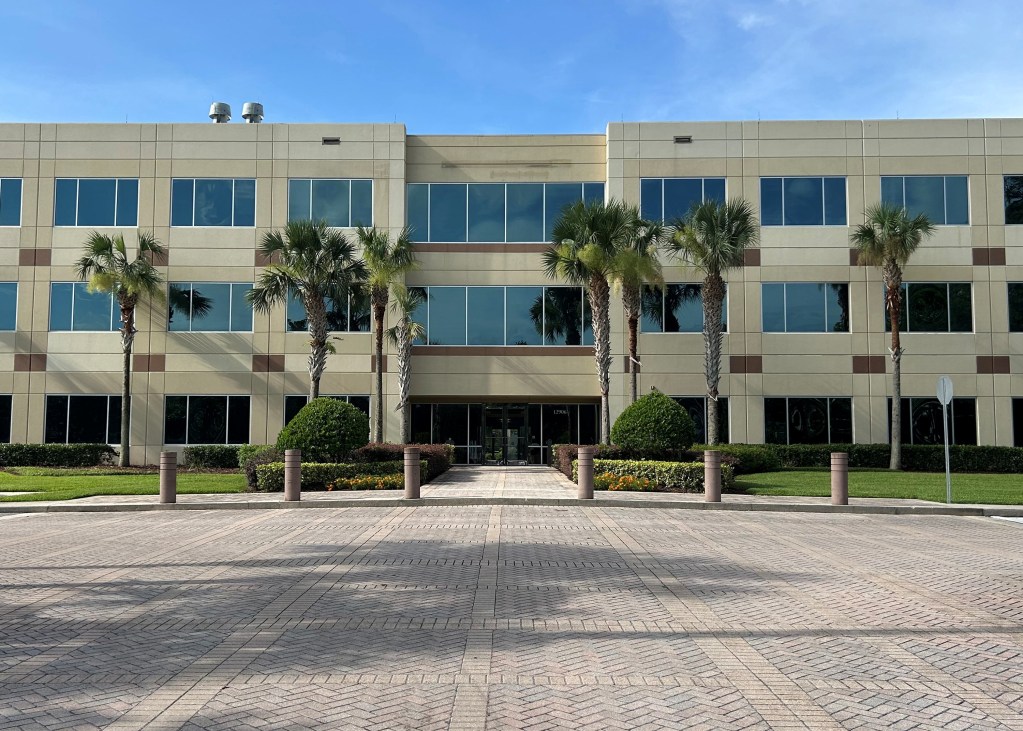
“A lot of students confused ‘out of compliance’ with not being accredited. But we’ve been accredited since 1972,” McGrath said. “We were found out of compliance for a couple of things over the years, like a lot of schools. Then you have time to fix it up.”
Cooley did fix the issues, McGrath said, and is back in compliance as of last October.
But it is still under monitoring by the Higher Learning Commission, which will visit the campus next year to evaluate how the law school is continuing to improve its program, McGrath said. The law school takes chances on a lot of students that other law schools don’t, so it had to tighten up its admission standards, McGrath said.
“The HLC and the ABA are interested in whether our program is one that is preparing students not just for passing the bar but for being a competent lawyer; they look at a lot of metrics,” McGrath said.
Cooley landed on the federal government’s cash monitoring list after tapping its endowment to make bond payments after student enrollment declined, McGrath said.
The federal government made the school give the government $2 million in cash to protect students in the event it had cash problems, McGrath said.
“We were in no danger of being bankrupt,” the president said. “But they saw it as an indicator and they wanted to be sure we could meet our obligations under the federal loan program so they made us put down a $2 million deposit.”
Two years later, Cooley paid off its bonds with proceeds from the sale of its former campuses in Ann Arbor, Grand Rapids and Auburn Hills, McGrath said, so there is no reason why the federal government still has the school’s $2 million deposit.
McGrath noted that staffing levels at the Department of Education have been trimmed so there are fewer people dealing with a lot of issues.
“We hope to get that money back,” said McGrath, “but we don’t know if it’s going to happen anytime soon.”
Albion College appeared on the federal government’s list because its income-to-debt ratio fell outsidethe terms of its agreement with its bond issuer, spokesperson Melissa Anderson said in a statement.
“We did not miss any payments,” Anderson said.
Other schools on the federal cash monitoring list did not respond for comment.
This article first appeared on Bridge Michigan and is republished here under a Creative Commons Attribution-NoDerivatives 4.0 International License.

Albion, Cooley, Madonna, 6 others on watch lists as financial woes mount added by admin on
View all posts by admin →