

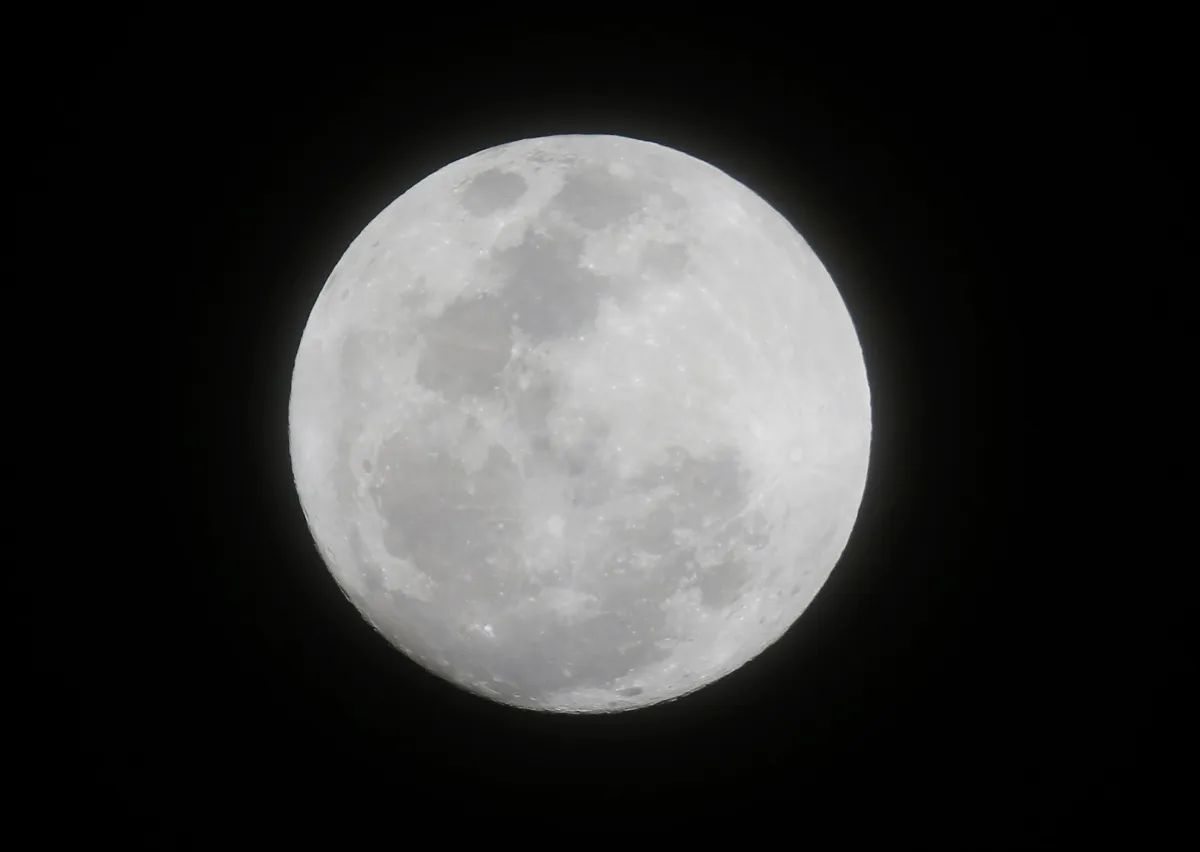
- Eight supermoons and a rare blue moon highlight the year
- Multiple meteor showers peak from spring through winter
- Six planets line up after sunset in February
From brighter moons to streaks of light across the night sky, 2026 will offer several chances for Michigan stargazers to look up.
Highlights include eight supermoons, a blue moon, major meteor showers from spring through winter and a February alignment of six planets. Many of these events should be visible from Michigan, especially in dark areas away from city lights.
Bigger, brighter moons
This year, there will be eight supermoons, including three full supermoons.
A supermoon is a full or new moon that is near its closest point to Earth, appearing larger and brighter, according to EarthSky. A full supermoon is a supermoon that is visible from Earth (some new supermoons aren’t always visible). All full supermoons are supermoons, but not all supermoons are full moons.
This year kicked off with a full supermoon in early January but the next two full supermoons will be in November and December. The moon is about 238,900 miles (384,472 kilometers) from Earth. But December’s supermoon will be the closest of the year at 221,667 miles (356,740 kilometers) away.
A blue moon will also make an appearance this year, on May 31, making it the second full moon that month.
Full moons occur about every 29 days, but calendar months are usually 30 or 31 days long. That mismatch means a blue moon shows up roughly once every two and a half years, which is where the phrase “once in a blue moon” originates.

Meteor showers galore
A meteor shower happens when Earth passes through a stream of debris left behind by a comet or asteroid. As those tiny pieces hit Earth’s atmosphere, they burn up and create streaks of light in the sky, often called shooting stars.
The next meteor shower is the Lyrids, a medium-strength shower that usually occurs over three nights, sometimes producing fireballs, according to the American Meteor Society. It will be active from April 14 through April 30.
During this time, the Eta Aquariids, a medium shower when viewed north of the equator, should produce 10 to 30 meteors per hour. It will be visible from April 19 through May 28.
Other notable meteor showers expected this year include:
- Alpha Capricornids: July 3-August 15
- Southern Delta Aquariids: July 12- August 23
- Perseids: July 17-August 24
- Orionids: October 2-November 7
- Southern Taurids: September 20-November 20
- Northern Taurids: October 20-December 10
- Leonids: November 6-30
- Geminids: December 6-17
- Ursids: December 17-26
A planet parade
In February, six planets, Mercury, Venus, Jupiter, Saturn, Uranus and Neptune, will line up in the sky in what’s known as a “planet parade,” according to the Planetary Society. Venus, Jupiter and Saturn will be the most visible, while Uranus and Neptune will be harder to detect.
You will need a high-powered telescope to spot Uranus and Neptune, but even then, those planets may be difficult to see.
The parade will be visible after sunset from mid-to-late February, according to EarthSky. On Feb. 26, Jupiter is expected to join the parade and appear near the moon.

Chasing the northern lights
The northern lights, or aurora borealis, are colorful displays of light in the night sky, usually seen near the Earth’s polar regions. They form when charged particles from the sun collide with gases in Earth’s atmosphere, causing the gases to glow. The colors depend on the type of gas and altitude, with green and pink most common, and red, blue, or purple sometimes appearing.
The northern lights were last widely visible across Michigan on Nov. 12, when a strong geomagnetic storm pushed auroras as far south as Grand Haven.
There are several phone apps you can download to alert you when there is a lot of geomagnetic activity in your area. Combine that with clear skies, and any night could be a show.

Where to watch
Optimal viewing hours for these celestial events are after sunset when it’s completely dark but it is dependent on where you are in the world. Tools like Time and Date can be used to help you figure out when to look up.
The best view will be in rural areas away from city lights, which could make the planetary parade, or any other astronomical phenomenon in the night sky, harder to see.
A high-powered telescope may be needed to see some events, but you could also visit an observatory to see them. Michigan also has several dark sky parks, particularly in the Upper Peninsula, that have ideal conditions for stargazing.
Business Watch
Covering the intersection of business and policy, and informing Michigan employers and workers on the long road back from coronavirus.
About Business Watch
Subscribe
Share tips and questions with Bridge Business Editor Paula Gardner
Thanks to our Business Watch sponsors.
Support Bridge’s nonprofit civic journalism. Donate today.
This must be the credit given on each article: Put at bottom of each article in small print
“This story was originally published by Bridge Michigan (bridgemi.com), a nonprofit and nonpartisan news organization. To get regular coverage from Bridge Michigan, sign up for a free Bridge Michigan newsletter here (https://bit.ly/BridgeMichiganNewsletter).”
Use photos as well and credit photos. Simply copy and paste name and put: Photo Credit: John Doe

Blue moon, ‘planet parade’ and meteor showers coming to Michigan skies added by Tribune on
View all posts by Tribune →