

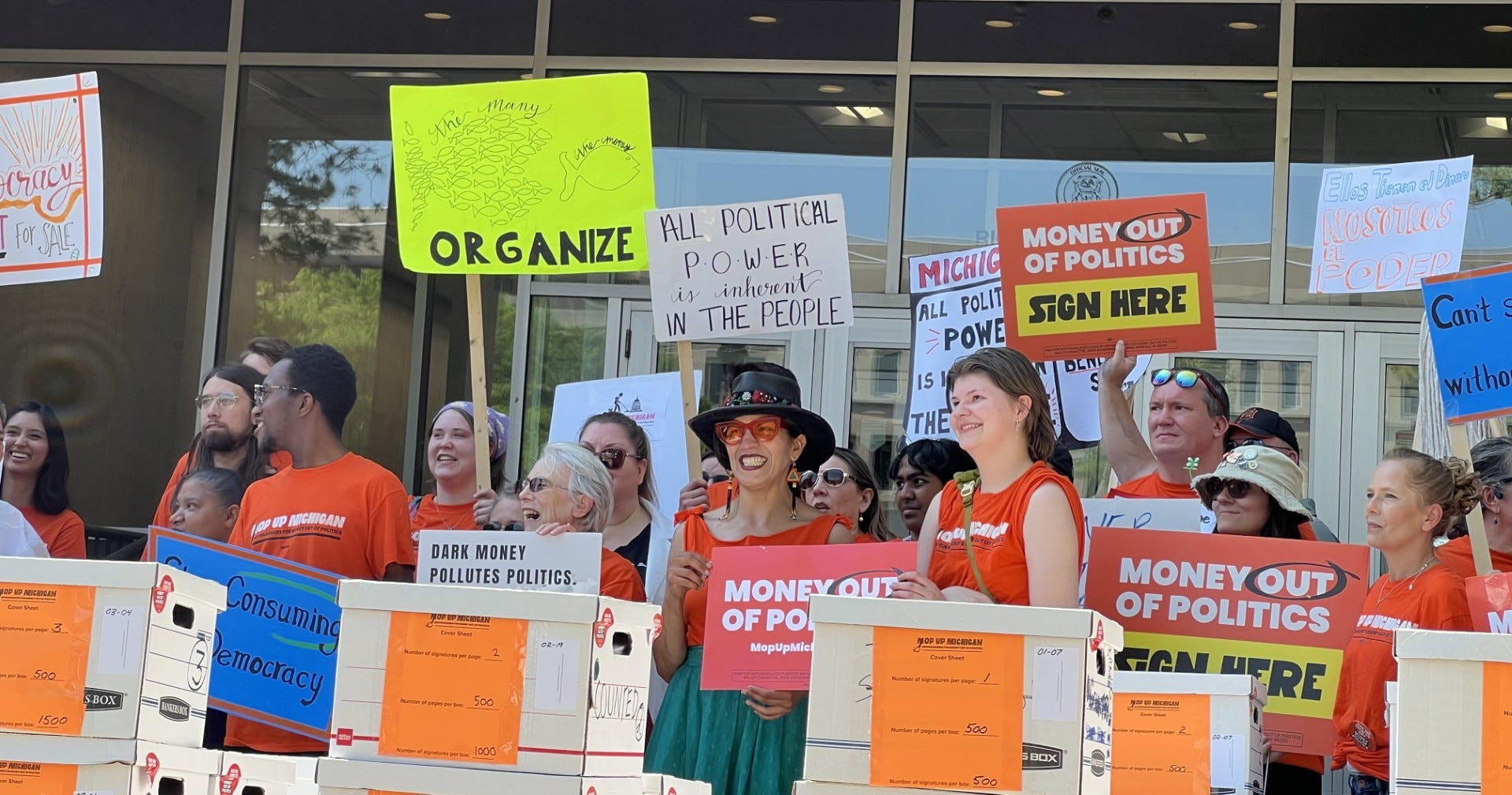
Michigan voters have been told Proposal 2 will “Mop Up Michigan” by removing corrupt money from campaigns. In reality, it would give the secretary of state and attorney general broad power to police the speech of Michigan nonprofits and associations under vague, subjective standards.
Prop 2 is ostensibly aimed at electric and gas utilities and large government contractors. Buried within the proposal, however, is a sweeping rewrite of state campaign finance law that would make it harder for Michiganians to organize around causes that have little or nothing to do with elections. Churches, charities, advocacy groups, think tanks, labor unions, trade associations and other nonprofits could be caught in its net.
The reason is simple: Prop 2 deliberately blurs the line between election advocacy and ordinary public-policy discussion.
Prop 2 expands Michigan’s definition of a regulated “expenditure” to cover communications that never tell anyone how to vote. Instead, regulators need only decide that a communication “promotes, attacks, supports, or opposes” — or “PASO” — a candidate or ballot measure. Any group that spends $500 in a year on PASO communications can be forced to register as a political committee and disclose its donors, including their home addresses.

The PASO standard may sound straightforward, but it doesn’t work in practice. Consider a nonprofit that criticizes a governor’s tax proposal or praises a legislator’s public safety bill. If those officials are also candidates, regulators could decide the communication “supports” or “opposes” them, even if the group never intended to influence an election.
The effects would not be equal. Savvy organizations with ample resources may feel more confident engaging in advocacy that could cross the PASO line. Small organizations that cannot afford specialized legal counsel will have a strong incentive to avoid the risk altogether.
Most citizens do not have lobbyists on retainer. Their influence comes from joining together with like-minded neighbors, friends and family members to amplify their voices. They support civil rights organizations, environmental groups, taxpayer associations, religious organizations and countless other causes. Importantly, they can do so privately, without inviting retaliation from powerful officials or dangerous individuals. Prop 2 transforms that fundamental freedom into a regulated campaign activity.
The law’s vagueness invites selective enforcement. Political opponents will have an incentive to file complaints against organizations whose speech they dislike, forcing those groups to spend time and money defending themselves and potentially exposing their donors. Michigan’s secretary of state and attorney general would wield substantial authority over how these standards are interpreted and enforced.
Serious constitutional problems remain, too. The Supreme Court has long resisted applying campaign finance rules designed for elections to organizations principally engaged in issue advocacy. Since 1958’s NAACP v. Alabama, the Court has also protected the privacy rights of nonprofit donors and members.
Supporters say Prop 2 closes loopholes. But the freedom to discuss ideas without setting up a political action committee and exposing your home address is not a loophole. It is a core part of the First Amendment.
Proposal 2 promises to mop up Michigan politics. In practice, it may sweep some of Michigan’s most important civic voices out of the public square.
Heather Lauer is CEO of People United for Privacy.
This article originally appeared on The Detroit News: Michigan Proposal 2 could silence civic voices | Opinion
Reporting by Heather Lauer / The Detroit News
USA TODAY Network via Reuters Connect

Michigan Proposal 2 could silence civic voices | Opinion added by admin on
View all posts by admin →