

Fact check: What’s true and what’s not in Michigan’s data center debate
This story was originally published by Bridge Michigan (bridgemi.com), a nonprofit and nonpartisan news organization. To get regular coverage from Bridge Michigan, sign up for a free Bridge Michigan newsletter here
- Michigan’s data center boom has brought with it some exaggerated claims from supporters and critics
- Bridge spoke with experts to get their take on everything from economic benefits to local control
- Among the takeaways, data centers indeed pose environmental concerns, but they aren’t raising electricity rates — at least not yet
Few issues are as controversial today as data centers, which polls show are overwhelmingly opposed by Michigan residents. Amid the debates, there are plenty of exaggerated claims from both opponents and supporters.
Bridge spoke with some of the leading experts in the field to separate fact from fiction.
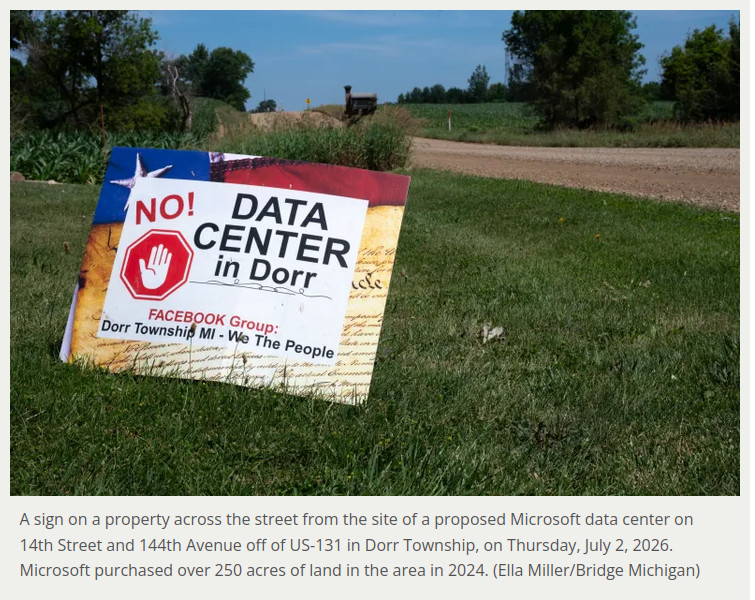
Despite assurances from state leaders that Michigan is a fitting destination to build warehouse-scale server farms across hundreds of acres, projects have been met with considerable pushback from a public worried about everything from their potential environmental impact to the unpredictable nature of artificial intelligence itself.
Claim: Data centers are a new thing for Michigan
What the experts say: No, but their scale is much, much bigger.
“A data center is the most fantastic economic development opportunity in the last 150 years,” said business leader and former US ambassador John Rakolta Jr. before the Detroit Policy Conference this year.
His company, Walbridge, is leading construction of one of the state’s largest projects: Oracle’s 1.4-gigawatt data center complex in the farmlands of Saline Township. It’s also a partner in the proposed 282-acre Google data center in Van Buren Township.
Data centers have been in Michigan for decades — tucked inside office parks, university buildings and industrial parks. They’ve generally gone unnoticed as they’ve powered our email, streaming services and websites.
By some estimates, there are upward of 70 commercial data centers operating in Michigan powering our digital information ecosystem.

Rakolta was referring to a new class of “hyperscale” data centers that are far bigger, more powerful and more expensive. Tech companies like Meta and Amazon plan to spend trillions of dollars on AI infrastructure through 2030 with thousands of projects underway, saying the technology will usher in a new era of cost savings, increased productivity and domestic industrial development.
A new generation
While a standard data center facility used for cloud computing may draw around 50 megawatts of energy, the increasingly sophisticated AI systems powering large language models and neural networks require magnitudes more power.
Related:
- Township vote paves way for Michigan’s second hyperscale data center
- Where Michigan governor candidates stand on data centers, the environment
- Survey: Michigan local leaders sour on data centers, want more regulations
- Ypsilanti Township eyes moratorium on power transmission to slow U-M data center
“The technology is turning data centers into a new class of industrial infrastructure,” said Hengguang Li, director of the Institute for AI and Data Science at Wayne State University. “It’s nothing like the data centers we built 30 years ago.”
Near Grand Rapids, Switch, a Las Vegas company, operates what is likely Michigan’s biggest functioning data center. Appearing as a modern pyramid jutting up from the freeway, the sprawling data center in Gaines Township has expanded for AI in recent years, with a planned electrical capacity of 237 megawatts.
With the growth of AI, the US and Michigan are promoting data center development to buoy the economy.
In 2024, the Michigan Legislature exempted qualifying data centers from Michigan’s 6% sales and use tax. Several proposals for what the state views as “enterprise” data centers have since materialized, while communities are debating the tax breaks.
Claim: Data centers move in with little regard to nearby communities
What the experts say: Developers have overridden local decisions in the past, but communities can be proactive about regulation.

Companies wanting to build data centers are looking for large parcels of land and access to electricity, fiber connectivity and water, said Jean Hardy, an MSU associate professor who researches digital development in rural communities. Often, that means farmland.
Communities are pushing back. No fewer than 30 have enacted moratoriums on data center development.
Critics say their communities are being singled out because they’re perceived as less regulated, Hardy said. Some worry that massive tech companies are able to steamroll rural locales as they scramble to effectively control data center development.
Many communities in the state had not given industrial development “any serious consideration” in a long time, according to Sarah Mills, director of the Center for EmPowering Communities at the University of Michigan’s Graham Sustainability Institute.
“I don’t suggest to communities that they make a data center ordinance. I think instead they should update what they expect out of industrial development,” Mills told Bridge.

In Saline Township, some residents felt data center developers were able to “bully their way in.” After the township officials denied zoning for the project, developers sued, and the board settled citing expensive legal fees in fighting the lawsuit.
Attorney General Dana Nessel and several environmentalists are challenging the Michigan Public Service Commission and DTE over its decisions to permit the project, saying the process was “fast-tracked” despite apparent “red flags.”
Claim: Data centers are raising electricity rates
What the experts say: Not true, at least for now.
In promoting a responsible growth pledge for data centers, Whitmer said families “have been protected from any rate increases due to data center development.”
Michigan’s residential electric rates are higher than the US average and lead the midwest.
But that trend is “not related to data centers,” according to Erik Nordman, director of the Institute of Public Utilities at Michigan State University. He said decarbonization efforts, grid reliability improvements and increasing costs for equipment are all impacting what you pay now.
As utilities rise to meet data center-driven energy demands, Nordman said Michigan will have to build its grid both cleaner and faster. But the state faces a dilemma: Energy demands are increasing at the same time the state is working to comply with a law requiring it to adopt 100% clean energy by 2040.
“It’s going to be a really challenging time,” Nordman said.
Future energy demands
If there’s excess energy in a system ahead of construction, he said a data center may lower rates for customers by covering the utility’s fixed costs, citing recent rate reductions proposed by Indiana Michigan Power, which has some 130,000 customers in the southwest corner of the state.
Michigan’s biggest energy utilities have promised similar cuts.
Consumers Energy president and CEO Garrick Rochow said in a July report that the utility’s average residential electric customer could see about “$7.50 per month of bill benefit with every gigawatt of new large load.”
Still, Nordman said there are conditions where “rates could rise,” as data centers and ratepayers share costs for grid improvements that benefit both groups.
Regulators can directly assign upgrades like substations and high-voltage transmission lines to industrial customers in Michigan, Nordman said, while the addition of a data center’s onsite generators and batteries can improve reliability throughout the utility.
The Michigan Public Service Commission has approved two data center contracts — the Oracle site in Saline Township and the Google project in Van Buren Township — requiring both to pay for infrastructure upgrades. Data centers are unable to qualify for the state’s 2024 sales and use tax exemption if their power needs require residential customers to pay.
The Saline Township data center is expected to increase DTE Energy’s energy load by 25%. In addition to its agreements with OpenAI and Google, the utility says it has about 6 gigawatts in the pipeline for other data center development. One gigawatt is enough electricity to power about 1.2 million Michigan homes.
Data centers could account for 11.8% of total US electricity usage by 2030, according to the Lawrence Berkeley National Laboratory. The rate was 4.4% in 2023.
Claim: Data centers harm the environment
What the experts say: High energy demands are likely to increase greenhouse gas emissions. Water usage is a low risk, but noise pollution is a concern.
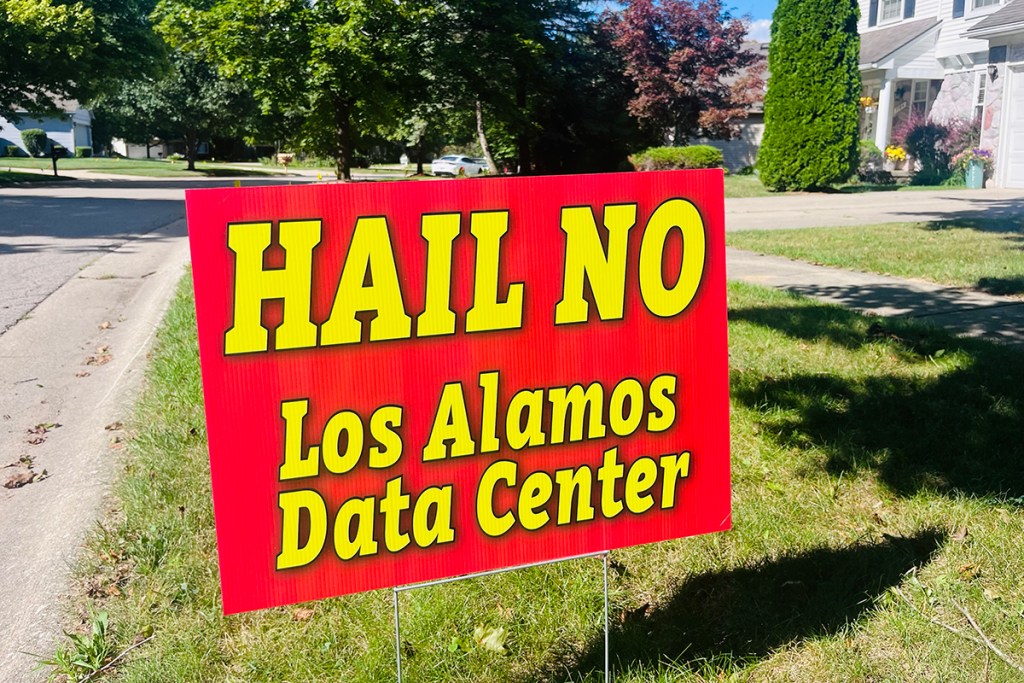
In response to a proposed $1.2 billion data center collaboration between the University of Michigan and Los Alamos National Laboratory, Ypsilanti City Council passed a resolution to oppose the effort.
The city cited its rejection of nuclear weapons research and cited media reports that data centers “pose significant environmental threats, including excessive water consumption and potential PFAS ‘forever chemical’ contamination that could endanger local water resources and public health.”
Hyperscale data centers need water for cooling, and some can consume millions of gallons of it per day. But how much the centers need can vary widely.
Some operate closed-loop systems designed to recirculate water, often mixed with glycol and other chemical additives, and use more power to keep servers cool. Open-loop systems consume more water as it evaporates into the atmosphere, but draw less energy.
“What’s really tricky is that some data centers use a lot of water to cool, and some data centers use practically none,” U-M’s Sarah Mills said.
Google’s Van Buren Township site could use up to 3.6 million gallons of water every day using both techniques, paying local authorities directly for usage. By comparison, the state reported the total industrial sector in Michigan used about 595 million gallons per day in 2025.
Most of a data center’s water usage would happen miles away. Michigan’s biggest consumer of water is electric power generation — Michigan utilities draw more than 5 billion gallons of water per day to cool energy production facilities.
Water in, water out
Michigan doesn’t require data centers to report all water usage, putting the onus on municipal systems. In Saline Township, developers have pledged to establish monitoring wells to track groundwater levels.
Data centers periodically discharge water into sewers and waterways under terms managed by local wastewater authorities. The Michigan Department of Environment, Great Lakes, and Energy issues permits for large volume withdrawals and wastewater blowdowns, stepping in where municipal water authorities are non-existent.
Greenhouse gases
While data centers powered by nuclear and renewable energy sources offer low-carbon alternatives, natural gas and coal generation remains the leading source of energy in Michigan.
“We’re already using all the electricity from our wind and our solar plants,” said Michael Craig, associate professor at the University of Michigan’s School for Environment and Sustainability and Industrial & Operations Engineering.
Leading up to Michigan’s 2040 clean energy rule, DTE and Consumers plan to use fossil fuel-burning power plants as they ramp up production to meet the demand of data centers, storing excess energy at battery storage facilities.
Craig said data center development in the state is expected to contribute to “more pollution in the air” from greenhouse gas emissions used for energy production unless they develop their own clean energy sources.
“Michigan is dirtier than most other grids in the United States, so a data center here is going to have more emissions than in California, which is one of the cleaner grids.”
Diesel backup generators also carry pollution risks, with concern they may run more frequently to meet demand.
Noise pollution
Data centers carry noise through their cooling equipment, battery energy storage systems and backup diesel generators.
Some studies show facilities with internal noise levels reaching up to 96 A-weighted decibels, or dBA — about the same noise level as a hairdryer. The noises can vary, too — low steady hums and high pitch alarms that can happen at all hours of the day or night.
How much that sound penetrates the environment is determined by how the center is designed.
Acoustical engineers say high frequency noise is more easily dampened by barriers and buildings. High pitch sounds are more easily absorbed through the ground and by foliage than low frequency sound, which experiences less loss due to atmospheric effects.
Prolonged exposure to loud sound has been linked to several adverse health outcomes, including hearing loss.
In Dowagiac, a recently idled 30-megawatt cryptomining operation next to a residential neighborhood is being sued in federal court over its noise. Residents claim industrial sounds have been recorded higher than 60 dBA outside the facility, causing them headaches and depriving them of enjoying the outdoors. The site closed in September and is converting to an AI data center — with an expected tenfold increase in energy usage.
Claim: Data centers are good for the economy
What the experts say: While the broad effects of AI in the workplace remain to be seen, local communities should see more tax revenue.
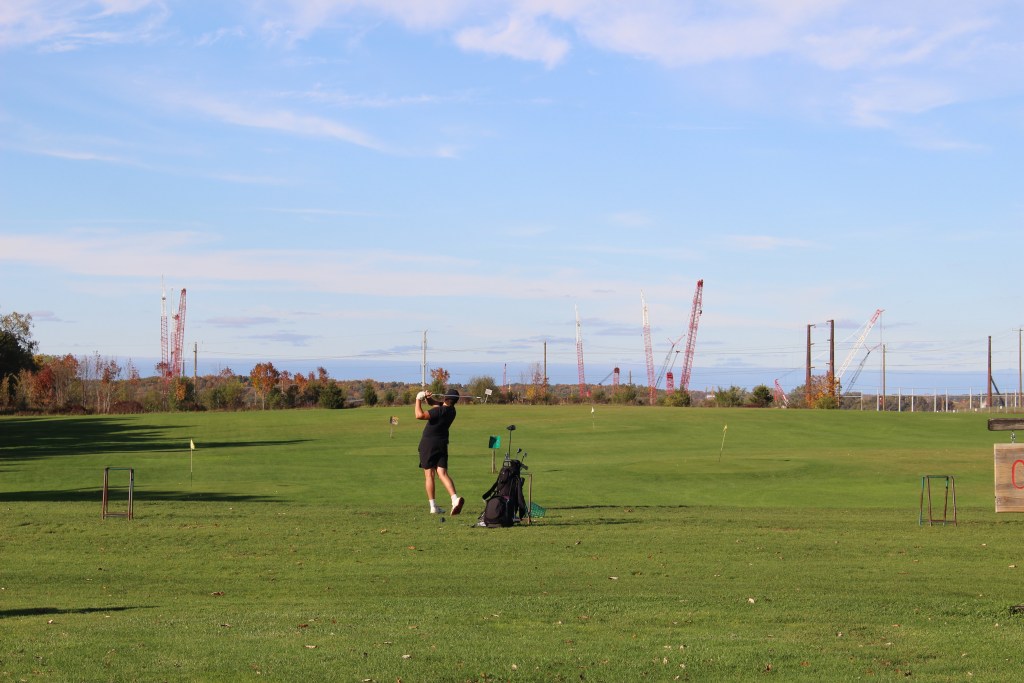
Consultants for the Michigan Chamber have called data centers a “once-in-a-generation opportunity” to create thousands of jobs and boost revenue for local communities.
Municipalities with major data center projects are expected to receive a boon in property taxes, even accounting for local exemptions and equipment depreciation.
For example, Van Buren Township is projected to earn more than $23 million from the Google project in 13 years.
That revenue picture gets complicated as estimates meet reality, according to Dennis of the Citizens Research Council. “I think it’s going to be really hard to figure out exactly how these things are going to be taxed and how much they’re going to benefit.”
Major job growth is limited to construction and site development, Dennis said.
“This is a huge investment that does not create a lot of jobs,” he told Bridge, estimating some sites will employ primarily in maintenance and security.
This article first appeared on Bridge Michigan and is republished here under a Creative Commons Attribution-NoDerivatives 4.0 International License.

Fact check: What’s true and what’s not in Michigan’s data center debate added by admin on
View all posts by admin →