

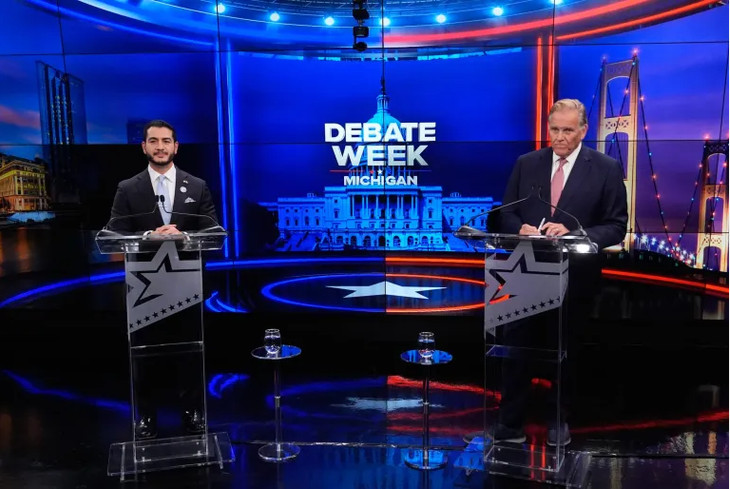
Fact check: Abdul El-Sayed and Mike Rogers debate Trump, tariffs, war, more
This story was originally published by Bridge Michigan (bridgemi.com), a nonprofit and nonpartisan news organization. To get regular coverage from Bridge Michigan, sign up for a free Bridge Michigan newsletter here
- Republican Mike Rogers and Democrat Abdul El-Sayed sparred in Grand Rapids for the first head-to-head general election debate
- The two candidates butted heads on the war in Iran, tariffs, their respective records and ties to outside groups
- Rogers and El-Sayed are slated to debate once more before the general election in Detroit on Oct. 21
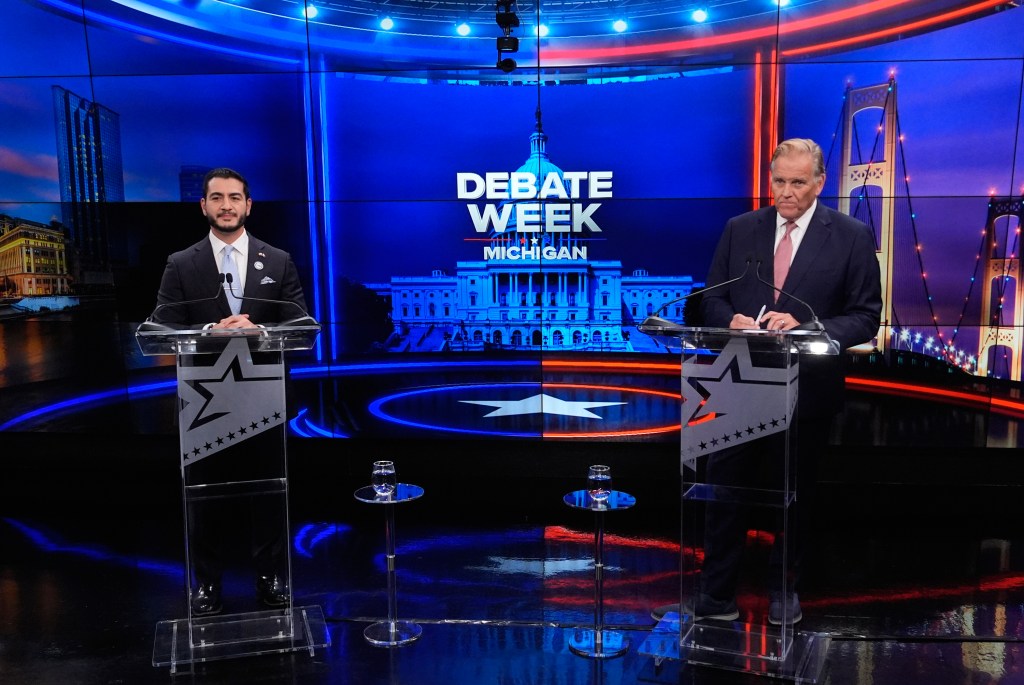
In their first of two debates ahead of the November general election, Democrat Abdul El-Sayed and Republican Mike Rogers sparred over gas prices, the Iran war, tariffs and more.
The testy back-and-forth even continued during a commercial break, according to Rick Albin of WOOD-TV, who moderated the hour-long debate in Grand Rapids.
El-Sayed called his opponent “cowardly” and “weak” for his alliance with President Donald Trump and changing positions on the Iran war and tariffs, which Rogers initially supported but has recently called for an end to.
Related:
- Watch full video of Abdul El-Sayed, Mike Rogers debate
- Rogers vs. El-Sayed: 7 issues defining the Senate race
- Fact checks ahead of Michigan’s general election
- Trump PAC drives Senate race toward record spending
Rogers called El-Sayed a “glitchy AI chatbot” and a “lightweight” on policy issues who repeats claims without following through, questioning his medical credentials, progressive stances and ties to the Middle East.
The candidates are locked in a fierce battle to replace retiring Democrat Gary Peters. The race is considered a true toss-up that could decide which party controls the Senate for the final two years of Trump’s term.
Here’s a look at what the candidates said, and the facts.
A ‘flip-flop’ on tariffs?
El-Sayed accused Rogers of flip-flopping on tariff policy, particularly with Canada, arguing that Rogers in recent ads is “drinking Labatts and talking about the Red Wings, pretending like he was not for this the entire time.”
He was referring to Rogers’ recent ad calling for an end to the tariff war with Canada, in which Rogers said Canada “is not our enemy.”
That was a notable shift for Rogers, who had previously defended the administration’s actions even as they garnered backlash from Michigan residents hard hit by price spikes on imported products.
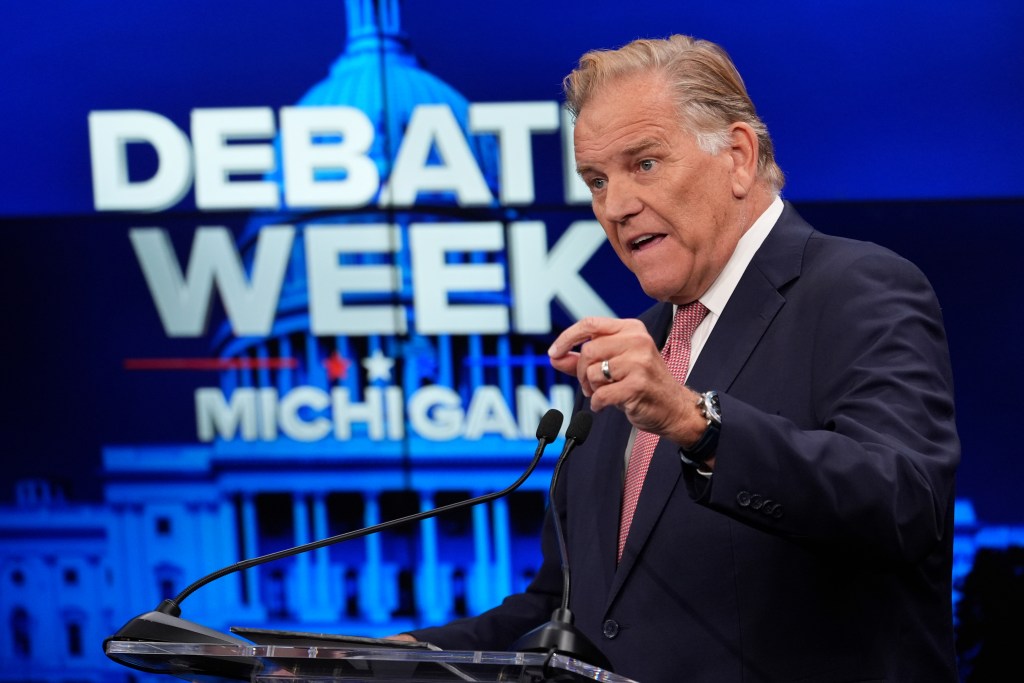
Rogers last year called Trump’s tariff strategy “masterful.”
As recently as August, he called them “necessary when countries cheat American workers,” arguing Trump was “right to put America First.”
Trump told reporters this week that he didn’t view Rogers’ comments as a departure from his views: “I viewed him as saying that he thinks Canada should make a deal.”
Rogers said Thursday he’d “like to see the deal made” and has discussed possible resolutions with the Trump administration. After the debate, he said his argument to the administration is, it’s “time to wrap this up.”
Traverse City cherries
Rogers still defended the efficacy of Trump’s tariffs on Michigan’s manufacturing industry, citing GM’s Michigan investment in production of the Chevy Silverado and claiming tariffs “saved Traverse City cherries.”
In early 2025, Michigan State University specialty crop experts told MSU’s Capital News Service that 10% tariffs on imports could slightly help the cherry industry compete, but warned that tariffs could accelerate the rise of input costs like pesticides, equipment and fertilizer.
In the first half of 2025, a Michigan tariff impact report prepared by the Whitmer administration showed fresh cherry exports had fallen 89% compared to the same period in 2024.
Sales prices did increase in 2026 after years of struggle, though several reports attributed that largely to good weather and other factors. There’s little direct evidence tariffs “saved” the Michigan industry.
A ‘fake doctor’ claim
Rogers repeatedly questioned El-Sayed’s medical credentials during the debate, reviving controversy that bubbled up during the Democratic primary.
“If somebody came into his office and he tried to treat that patient, he’d go to jail,” Rogers said, arguing at various points that El-Sayed is “not really a doctor.”
El-Sayed is a doctor — he earned a medical degree from Columbia University — but has faced criticism for calling himself a “physician” even though he doesn’t have a license to practice medicine.
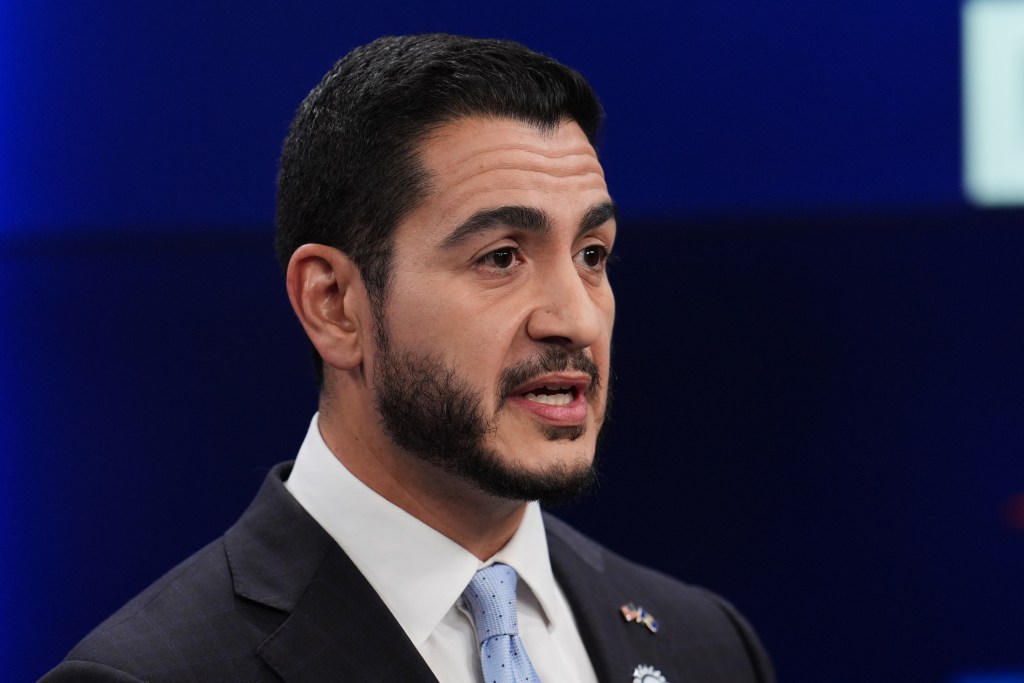
Michigan Public health code defines the title of physician as “an individual who is licensed or authorized” under state law “to engage in the practice of medicine.”
El-Sayed went into public health, serving as director in Detroit and Wayne County, rather than practicing medicine.
He’s previously said that after treating a patient in medical school, he decided he wanted to address systemic issues rather than individual patients. He’s dismissed accusations he is inflating his credentials for political gain.
On Thursday, El-Sayed referenced his medical degree from Columbia and said Rogers could “take it up with them.”
Iran war shift
As with tariffs, El-Sayed similarly argued Rogers’ stance on the war in Iran has changed significantly in the run-up to the election.
That’s true: Rogers is now calling for an end to the war but had a long record of backing the conflict, which Trump has said was necessary to prevent Iran from developing a nuclear weapon.
- The day the Iran war began, on Feb. 28, Rogers wrote on X, “Iran is an imminent threat to our country—and must not have a nuclear weapon.”
- On May 31, Rogers called the war a “win-win-win,” saying that if Iran emerged as a peaceful nation, the US would no longer have to send military aid to Israel. But “I want it over,” he added, saying that preventing Iran from developing a nuclear weapon “obviously … brought some costs that are hard to live with.”
El-Sayed latched onto the “win-win-win” comment during the debate, asking viewers, “Are we winning? Is anyone actually winning?”
Rogers said he’s called for an end to the war in part because the US has “set back the nuclear program at least 20 years…this would be the time to wrap it up.”
Wealth and properties
Rogers and El-Sayed repeatedly sparred over each other’s personal wealth and real estate holdings.
El-Sayed argued Rogers made $14 million after leaving Congress in 2014 and owns a multimillion-dollar home in Florida. Rogers claimed El-Sayed is “worth a million bucks” and owns homes in the United Arab Emirates “and Egypt, if I’m not mistaken.”
What’s true?
Personal financial disclosures and property records show:
- Rogers and his wife have a net worth of $7 million to $14 million, up from a maximum of $1.7 million when he left Congress in 2014. They purchased a home in Florida for $1.6 million in 2022. After moving back to Michigan, Rogers tried to sell the home, most recently listing it for $2.4 million before pulling it from the market in September.
- El-Sayed and his wife are worth between $700,000 and $2.1 million. They do own two rental properties abroad, but not in Egypt. The rentals are in the UAE’s Dubai and Bangalore, India.
‘Muslim Brotherhood’ claims
Rogers claimed El-Sayed’s “biggest funders are from a group that supports the Muslim Brotherhood,” which historically has advocated for political systems entwined with Islamic law and has had some chapters designated as terrorist organizations.
The claim appeared to be a reference to contributions by staff members of the Council of American Islamic Relations, or CAIR, a mainstream civil rights group that advocates for US Muslims.
Rogers previously claimed El-Sayed “pledged his support to the Muslim Brotherhood,” which Bridge fact checked and found no evidence for.
Likewise, there is no clear evidence CAIR “supports the Muslim Brotherhood.”
CAIR was named an “unindicted co-conspirator” by federal prosecutors in a case in which five former leaders of the Holy Land Foundation were ultimately convicted of sending millions of dollars to Hamas. CAIR was not indicted, and an appeals court found the US violated rights of another group it had implicated by not giving it a chance to defend itself.
CAIR has called efforts to tie the organization to the Muslim Brotherhood “pure McCarthyism” and described its inclusion in the Holy Land Foundation case “an unproven allegation with no weight and no consequence.”
Following the debate, El-Sayed suggested the claims are veiled attacks on his ethnicity and religion. “They think they can point to my name and say a bunch of scary words, and that people are going to forget that they pay way too much for gas and groceries,” he told reporters.
Prescription drug votes
During exchanges on healthcare affordability, El-Sayed suggested Rogers is beholden to the pharmaceutical industry, claiming he “voted four times to keep you from buying (cheaper) prescription drugs in Canada.”
Rogers countered, saying he “pushed the acceleration of generic drugs” to lower prices, which pharmaceutical companies were “not happy about.”
Both claims are largely true.
Rogers voted at least four times against drug reimportation proposals while serving in the US House. The measures sought to lower costs by allowing drugs back into the US from Canada. In one case, Rogers said he feared increased access to counterfeit drugs.
Rogers later supported legislation that aimed to reduce prescription drug prices by allowing more access to generic drugs.
Data center investments
Both US Senate candidates have called for a data center moratorium but questioned each other’s commitment because of personal investments.
El-Sayed has “got $100,000 in a mutual fund directly invested in the companies that do data centers,” Rogers claimed.
El-Sayed dismissed the mutual fund criticism as “a joke” and claimed Rogers is “personally invested in the company that controls the real estate” for the massive data center project in Saline Township, near Ann Arbor.
Personal financial disclosures show:
- El-Sayed has between $50,001 and $100,000 invested in Amana Growth Fund, a mutual fund with holdings that include Apple, Alphabet and Nvidia, which are all involved in AI. His campaign has said he “does not control the investments made through mutual funds as part of his retirement account.”
- Rogers has between $100,001 and $250,000 invested in the Blackstone Real Estate Income Trust. Blackstone is helping finance the Saline data center. but the property is controlled by a subsidiary of Related Companies Inc.
This article first appeared on Bridge Michigan and is republished here under a Creative Commons Attribution-NoDerivatives 4.0 International License.

Fact check: Abdul El-Sayed and Mike Rogers debate Trump, tariffs, war, more added by admin on
View all posts by admin →